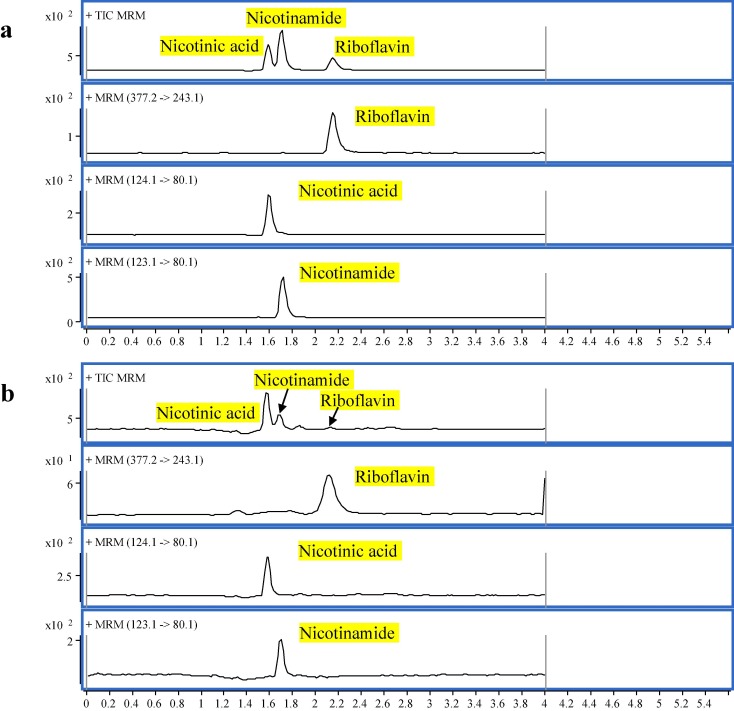
The present study assessed the nutritional composition of coffee silverskin (CSS) obtained from arabica roasted coffee. Following validated analytical methods, CSS resulted to be a high source of proteins (14.2 g/100 g) and dietary fibers (51.5 g/100 g). Moreover, the mineral analysis revealed high contents of calcium (1.1 g/100 g) and potassium (1.0 g/100 g). To date, this study provided the widest mineral profile of CSS with 30 minerals targeted including 23 microminerals with high levels of iron (238.0 mg/kg), manganese (46.7 mg/kg), copper (37.9 mg/kg), and zinc (31.9 mg/kg). Moreover, vitamins B2 (0.18–0.2 mg/kg) and B3 (2.5–3.1 mg/kg) were studied and reported for the first time in CSS. β-sitosterol (77.1 mg/kg), campesterol, stigmasterol, and Δ5-avenasterol, were also observed from the phytosterol analysis of CSS with a total level of 98.4 mg/kg. This rich nutritional profile highlights the potential values of CSS for innovative reuses in bioactive ingredients development.
Showing posts with label Nutrients. Show all posts
Wednesday, 5 January 2022
Friday, 2 October 2020
Extraction, Properties, and Applications of Bioactive Compounds Obtained from Microalgae
Current Pharmaceutical Design, 2020, 26, 1929-1950
DOI: 10.2174/1381612826666200403172206

With the increase in the global population, getting new sources of food is essential. One of the solutions can be found in the oceans due to algae. Microalgae are aquatic photosynthetic organisms used mainly due to their variety of bioactive compounds. The consumption of microalgae has been carried out for centuries and is recommended by organizations, such as OMS and FAO, due to its nutritional value and its properties. Based on the existing literature, there is substantial evidence of the nutritional quality of the algae as well as their functional elements. However, much quantification is still necessary, as well as studying possible adverse effects. The present review describes the compounds of alimentary interest present in these algae as well as different extraction techniques assisted by different energetic mechanisms (such as heat, supercritical-fluid, microwave, ultrasound, enzymes, electric field, high hydrostatic pressure, among others). The most challenging and crucial issues are reducing microalgae growth cost and optimizing extraction techniques. This review aimed a better understanding of the uses of microalgae for new researches in nutrition. Since the use of microalgae is still a field in which there is much to discover, it is likely that more benefits will be found in its consumption.
Labels:
Applications,
Bioactive compounds,
Extraction,
Microalgae,
Nutrients,
Properties
Sunday, 11 December 2016
Changes on the Phytoavailability of Nutrients in a Mine Soil Reclaimed with Compost and Biochar
Water, Air, & Soil Pollution, 2016, 227:453
DOI: 10.1007/s11270-016-3155-x
Mine soils often contain high levels of metals that produce serious environmental problems and poor fertility conditions that limit their reclamation. The aim of this study was to evaluate the influence of a compost and biochar amendment on the nutrient phytoavailability in a mine soil from the depleted copper mine of Touro (Spain). For this purpose, a greenhouse experiment was carried out amending the mine soil with increasing proportions (20, 40, 80 and 100%) of the compost and biochar mixture and planting Brassica juncea plants. The results revealed that the mine soil had an extremely acid pH and low fertility conditions and was affected by copper contamination. The addition of compost and biochar to the mine soil increased soil pH values (from 2.7 to 8.7), total carbon (from undetectable values to 149 g kg−1) and total nitrogen (from undetectable values to 11,130 mg kg−1) contents and phytoavailable concentrations of K, Mg, Na and P and promoted plant growth, since B. juncea plants did not survive in the untreated mine soil. The application of amendment decreased the phytoavailable concentration of Al, Co, Cu, Fe and Ni in the soil, resulting in a reduction of copper toxicity. The use of compost and biochar as a soil amendment combined with B. juncea plants could be an efficient strategy for the reclamation of degraded soils with low fertility conditions.
Labels:
Biochar,
Brassica juncea,
Compost,
Mine soil,
Nutrients
Subscribe to:
Posts (Atom)

