Showing posts with label seaweeds. Show all posts

Sunday, 5 March 2023

Pressurized Liquid Extraction for the Recovery of Bioactive Compounds from Seaweeds for Food Industry Application: A Review

Antioxidants 2023, 12(3), 612


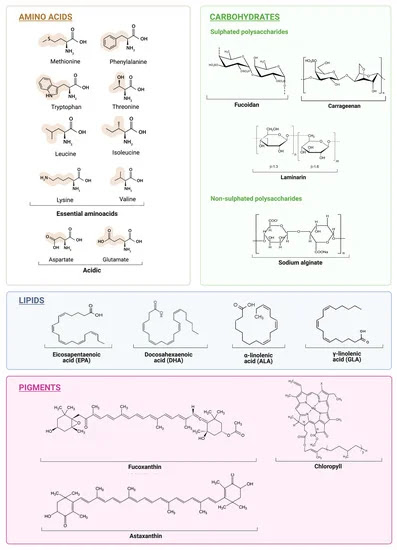
Seaweeds are an underutilized food in the Western world, but they are widely consumed in Asia, with China being the world’s larger producer. Seaweeds have gained attention in the food industry in recent years because of their composition, which includes polysaccharides, lipids, proteins, dietary fiber, and various bioactive compounds such as vitamins, essential minerals, phenolic compounds, and pigments. Extraction techniques, ranging from more traditional techniques such as maceration to novel technologies, are required to obtain these components. Pressurized liquid extraction (PLE) is a green technique that uses high temperatures and pressure applied in conjunction with a solvent to extract components from a solid matrix. To improve the efficiency of this technique, different parameters such as the solvent, temperature, pressure, extraction time and number of cycles should be carefully optimized. It is important to note that PLE conditions allow for the extraction of target analytes in a short-time period while using less solvent and maintaining a high yield. Moreover, the combination of PLE with other techniques has been already applied to extract compounds from different matrices, including seaweeds. In this way, the combination of PLE-SFE-CO2 seems to be the best option considering both the higher yields obtained and the economic feasibility of a scaling-up approximation. In addition, the food industry is interested in incorporating the compounds extracted from edible seaweeds into food packaging (including edible coating, bioplastics and bio-nanocomposites incorporated into bioplastics), food products and animal feed to improve their nutritional profile and technological properties. This review attempts to compile and analyze the current data available regarding the application of PLE in seaweeds to determine the use of this extraction technique as a method to obtain active compounds of interest for food industry application.


Monday, 1 August 2022

Safer plant-based nanoparticles for combating antibiotic resistance in bacteria: A comprehensive review on its potential applications, recent advances, and future perspective

 Science of the Total Environment, 821, 153472. 2022


Background

Antibiotic resistance is one of the current threats to human health, forcing the use of drugs that are more noxious, costlier, and with low efficiency. There are several causes behind antibiotic resistance, including over-prescription of antibiotics in both humans and livestock. In this scenario, researchers are shifting to new alternatives to fight back this concerning situation.


Scope and approach

Nanoparticles have emerged as new tools that can be used to combat deadly bacterial infections directly or indirectly to overcome antibiotic resistance. Although nanoparticles are being used in the pharmaceutical industry, there is a constant concern about their toxicity toward human health because of the involvement of well-known toxic chemicals (i.e., sodium/potassium borohydride) making their use very risky for eukaryotic cells.


Key findings and conclusions

Multiple nanoparticle-based approaches to counter bacterial infections, providing crucial insight into the design of elements that play critical roles in the creation of antimicrobial nanotherapeutic drugs, are currently underway. In this context, plant-based nanoparticles will be less toxic than many other forms, which constitute promising candidates to avoid widespread damage to the microbiome associated with current practices. This article aims to review the actual knowledge on plant-based nanoparticle products for antibiotic resistance and the possible replacement of antibiotics to treat multidrug-resistant bacterial infections.

Tuesday, 17 September 2019

The Potential of Seaweeds as a Source of Functional Ingredients of Prebiotic and Antioxidant Value

 Antioxidants 2019, 8(9), 406


Two thirds of the world is covered by oceans, whose upper layer is inhabited by algae. This means that there is a large extension to obtain these photoautotrophic organisms. Algae have undergone a boom in recent years, with consequent discoveries and advances in this field. Algae are not only of high ecological value but also of great economic importance. Possible applications of algae are very diverse and include anti-biofilm activity, production of biofuels, bioremediation, as fertilizer, as fish feed, as food or food ingredients, in pharmacology (since they show antioxidant or contraceptive activities), in cosmeceutical formulation, and in such other applications as filters or for obtaining minerals. In this context, algae as food can be of help to maintain or even improve human health, and there is a growing interest in new products called functional foods, which can promote such a healthy state. Therefore, in this search, one of the main areas of research is the extraction and characterization of new natural ingredients with biological activity (e.g., prebiotic and antioxidant) that can contribute to consumers’ well-being. The present review shows the results of a bibliographic survey on the chemical composition of macroalgae, together with a critical discussion about their potential as natural sources of new functional ingredients.