J. Agric. Food Chem. 2022, 70, 27, 8274–8287
Wednesday, 29 June 2022
Fu Brick Tea Manages HFD/STZ-Induced Type 2 Diabetes by Regulating the Gut Microbiota and Activating the IRS1/PI3K/Akt Signaling Pathway
Monday, 27 June 2022
Application of Protein in Extrusion-Based 3D Food Printing: Current Status and Prospectus
Friday, 10 June 2022
Lobularia libyca: Phytochemical Profiling, Antioxidant and Antimicrobial Activity Using In Vitro and In Silico Studies
Saturday, 4 June 2022
Nano-priming as emerging seed priming technology for sustainable agriculture—recent developments and future perspectives
Journal of Nanobiotechnology 20, 254 (2022)
Friday, 3 June 2022
Novel hydrophobic colorimetric films based on ethylcellulose/castor oil/anthocyanins for pork freshness monitoring
Wednesday, 1 June 2022
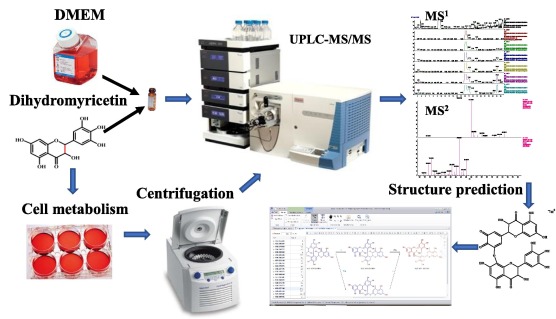
Stability profiling and degradation products of dihydromyricetin in Dulbecco's modified eagle's medium
Dihydromyricetin has shown many bioactivities in cell level. However, dihydromyricetin was found to be highly instable in cell culture medium DMEM. Here, the underlying degradation mechanism was investigated via UPLC-MS/MS analysis. Dihydromyricetin was mainly converted into its dimers and oxidized products. At lower temperature, dihydromyricetin in DMEM showed higher stability. Vitamin C increased the stability of dihydromyricetin in DMEM probably due to its high antioxidant potential.
Monday, 30 May 2022
A high-stable and sensitive colorimetric nanofiber sensor based on PCL incorporating anthocyanins for shrimp freshness
Wednesday, 18 May 2022
Green Synthesis of Silver Nanoparticles Using Allium cepa var. Aggregatum Natural Extract: Antibacterial and Cytotoxic Properties
Nanomaterials 2022, 12(10), 1725
Friday, 13 May 2022
Nutmeg (Myristica fragrans Houtt.) essential oil: A review on its composition, biological, and pharmacological activities
Phytotherapy Research, 36, 2839-2851, 2022
Myristica fragrans (Houtt.) is an evergreen tree native to the Maluku Islands, Indonesia. M. fragrans kernel is extensively used in Indian traditional medicines to treat various diseases. Several studies attempt to compile and interpret the pharmacological potential of Myristica fragrans (Houtt.) aqueous and various chemical extracts. Thus, the pharmacological potential of nutmeg essential oil has not been reviewed phytochemically and pharmacologically. Therefore, the present study aimed to share appropriate literature evidence regarding the plant essential oil chemical composition and therapeutic potential of Myristica fragrans essential oil (MFEO). MFEO of leaf, mace, kernel, and seed were used worldwide as potential Ayurvedic medicine and fragrance. MFEO extracted by various methods and oil yield was 0.7–3.2, 8.1–10.3, 0.3–12.5, and 6.2–7.6% in leaf, mace, seed, and kernel. The primary chemical constituents of MFEO were sabinene, eugenol, myristicin, caryophyllene, β-myrcene, and α-pinene. Clinical and experimental investigations have confirmed the antioxidant, antimicrobial, antiinflammatory, anticancer, antimalarial, anticonvulsant, hepatoprotective, antiparasitic, insecticidal, and nematocidal activities of MFEO. It is the first attempt to compile oil yield, composition, and the biological activities of MFEO. In future, several scientific investigations are required to understand the mechanism of action of MFEO and their bioactive constituents.
Wednesday, 11 May 2022
Fruit Juice Industry Wastes as a Source of Bioactives
J. Agric. Food Chem. 2022, 70, 23, 6805–6832
Tuesday, 10 May 2022
Recent Development in Antioxidant Peptides of Woody Oil Plant By-Products
Monday, 2 May 2022
Volatile Flavor Compounds of Pugionium cornutum (L.) Gaertn. Before and After Different Dehydration Treatments
Sunday, 1 May 2022
The reciprocal interaction between polyphenols and other dietary compounds: Impact on bioavailability, antioxidant capacity and other physico-chemical and nutritional parameters
Food Chem. 375, 131904, (2022)
Thursday, 28 April 2022
Humic Acids Aggregates as Microheterogeneous Reaction Media: Alkaline Hydrolysis Reactions
The influence of humic aggregates in a water solution upon the chemical stability under basic conditions of different substrates was reviewed. The kinetic behavior of each substrate was modeled in terms of a micellar pseudophase model.
Wednesday, 27 April 2022
Reactivity of a Recombinant Esterase from Thermus thermophilus HB27 in Aqueous and Organic Media
Microorganisms 2022, 10(5), 915
Tuesday, 26 April 2022
Genetic variability, combining ability and molecular diversity-based parental line selection for heterosis breeding in field corn (Zea mays L.)
Mol Biol Rep 49, 4517–4524 (2022)
An Overview of Traditional Uses, Phytochemical Compositions and Biological Activities of Edible Fruits of European and Asian Cornus Species
Cornus species are widely distributed in central and southern Europe, east Africa, southwest Asia, and America. Several species are known for edible fruits, especially Cornus mas and Cornus officinalis. These delicious fruits, characterized by their remarkable nutritional and biological values, are widely used in traditional medicine. In contrast to the other edible Cornus species, C. mas and C. officinalis are the most studied for which little information is available on the main phytochemicals and their biological activities. Fruits are characterised by several classes of secondary metabolites, such as flavonoids, phenolic acids, lignans, anthocyanins, tannins, triterpenoids, and iridoids. The available phytochemical data show that the different classes of metabolites have not been systematically studied. However, these edible species are all worthy of interest because similarities have been found. Thus, this review describes the traditional uses of Cornus species common in Europe and Asia, a detailed classification of the bioactive compounds that characterize the fruits, and their beneficial health effects. Cornus species are a rich source of phytochemicals with nutritional and functional properties that justify the growing interest in these berries, not only for applications in the food industry but also useful for their medicinal properties.
Thursday, 14 April 2022
Effects of Torreya grandis Kernel Oil on Lipid Metabolism and Intestinal Flora in C57BL/6J Mice
Oxidative Medicine and Cellular Longevity, 2022, 4472751
Wednesday, 13 April 2022
Ultrasonic-assisted extraction of polyphenolic compounds from Paederia scandens (Lour.) Merr. Using deep eutectic solvent: optimization, identification, and comparison with traditional methods
Ultrasonics Sonochemistry, 86, 106005, 2022
Ultrasonic-assisted extraction (UAE) coupled with deep eutectic solvent (DES) is a novel, efficient and green extraction method for phytochemicals. In this study, the effects of 16 DESs coupled with UAE on the extraction rate of polyphenols from Paederia scandens (Lour.) Merr. (P. scandens), an edible and medicinal herb, were investigated. DES synthesised with choline chloride and ethylene glycol at a 1:2 M ratio resulted in the highest extractability. Moreover, the effects of extraction parameters were investigated by using a two-level factorial experiment followed by response surface methodology The optimal parameters (water content in DES of 49.2%, the actual ultrasonic power of 72.4 W, and ultrasonic time of 9.7 min) resulted in the optimal total flavonoid content (TFC) (27.04 mg CE/g DW), ferric-reducing antioxidant power (FRAP) value (373.27 μmol Fe(Ⅱ)E/g DW) and 2,2′-azino-bis(3-ethylbenzthiazoline)-6-sulfonic acid radical (ABTS+) value (48.64 μmol TE/g DW), closely matching the experimental results. Furthermore, a comparison study demonstrated that DES-UAE afforded the higher TFC and FRAP value than traditional extraction methods. 36 individual polyphenolic compounds were identified and quantified by ultra-high-performance liquid chromatography-mass spectrometry (UHPLC-MS) in P. scandens extracts, and of which 30 were found in the extracts obtained by DES-UAE. Additionally, DES-UAE afforded the highest sum of individual polyphenolic compound content. These results revealed that DES-UAE enhanced the extraction efficiency for polyphenols and provided a scientific basis for further processing and utilization of P. scandens.
Wednesday, 6 April 2022
Blockchain: An emerging novel technology to upgrade the current fresh fruit supply chain
Trends in Food Science & Technology, 124, 1-12, 2022