Showing posts with label Stability. Show all posts

Wednesday, 1 June 2022

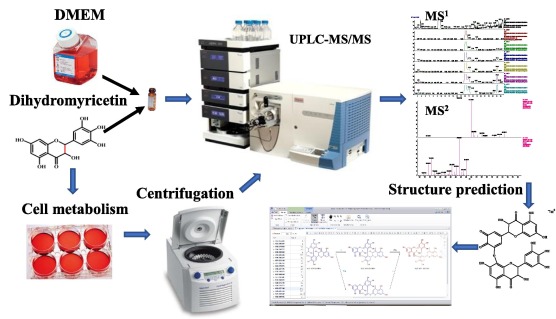
Stability profiling and degradation products of dihydromyricetin in Dulbecco's modified eagle's medium

 Food Chem. 378, 132033 (2022)


Dihydromyricetin has shown many bioactivities in cell level. However, dihydromyricetin was found to be highly instable in cell culture medium DMEM. Here, the underlying degradation mechanism was investigated via UPLC-MS/MS analysis. Dihydromyricetin was mainly converted into its dimers and oxidized products. At lower temperature, dihydromyricetin in DMEM showed higher stability. Vitamin C increased the stability of dihydromyricetin in DMEM probably due to its high antioxidant potential.

Tuesday, 11 January 2022

Stability and antioxidant capacity of epigallocatechin gallate in Dulbecco's modified eagle medium

 Food Chem. 366, 130521, 2022


Though the instability of polyphenols in cell culture experiment has been investigated previously, the underlying mechanism is not completely clear yet. Therefore, in this study, the stability of epigallocatechin gallate (EGCG) in cell culture medium DMEM was investigated at 4 °C and 37 °C via UPLC-MS-MS analysis followed by determination of the antioxidant capacity of EGCG. EGCG was instable in DMEM and formed various degradation products derived from its dimer with increasing incubation time with many isomers being formed at both temperatures. The dimer products were more stable at 4 °C than at 37 °C. The structure and formation mechanism of five products were analyzed with four unidentified. Ascorbic acid significantly improved the stability of EGCG by protecting EGCG from auto-oxidation in DMEM, particularly at 4 °C. The antioxidative activity of EGCG in DMEM was determined by DPPH, ABTS and FRAP assay. The antioxidative properties of EGCG continuously decreased over 8 h in DMEM, which was consistent with its course of degradation.


Saturday, 23 May 2020

Dietary polyphenols for managing cancers: What have we ignored?

 Trends in Food Science & Technology, 2020, 101, 150-164

DOI: 10.1016/j.tifs.2020.05.017


Although the chemoprevention and anti-cancer activities of dietary polyphenols have been evidenced through both in vitro and in vivo studies, most of the human clinical trials were unsuccessful or even harmful. Debates on the beneficial roles of dietary polyphenols in cancer therapy are increasing. Many dietary polyphenols studies are conducted by in vitro experiments, but the nature of these studies does not consider the complexity of metabolic processes that are present in vivo. These can often cause instability in the dietary polyphenols, thereby leading to unsuccessful extrapolation into animal or human studies. Dietary polyphenols often have low bioavailability, which is mainly due to poor bioaccessibility and significant metabolism mediated by both host enzymes and colon microbiota. Some metabolites or catabolites are more potent and absorb better than the parent component. It is recognised that the oral bioavailability of dietary polyphenols is underestimated when the bioactive metabolites or catabolites are not considered. Notably, dietary polyphenols and their metabolites undergo further cellular metabolism within the cancer cells, which confers “cellular bioavailability” as an additional step to influence the actions of dietary polyphenols. Moreover, there are growing controversies in using dietary polyphenols for both chemopreventive and anti-cancer applications. A clear therapeutic window for dietary polyphenols as specific chemopreventive or chemotherapeutic agents is required. This review, thus, aims to identify key issues that were ignored by most of the studies, or are critical for future investigation.