Monday, 16 January 2023

HPLC–DAD Analysis, Antimicrobial and Antioxidant Properties of Aromatic Herb Melissa officinalis L., Aerial Parts Extracts

 Food Analytical Methods 16, 45–54 (2023)


In order to enhance natural products value, Melissa officinalis (lemon balm) aerial part (leaves) has been studied in this work. Hence, the objective of this study is to determine the chemical composition of the studied plant polyphenols extracts using HPLC/DAD, as well as evaluate their flavonoid extracts’ antioxidant and antimicrobial activities using DPPH• and disk diffusion methods, respectively. The results of phenols chemical composition showed the existence of two phenolic acids, five flavonic aglycones and six heterosides, while the biologic results of the plant flavonoid extracts exhibited the existence of a good antioxidant and antimicrobial activities.

Sunday, 15 January 2023

The International Natural Product Sciences Taskforce (INPST) and the power of Twitter networking exemplified through #INPST hashtag analysis

 Phytomed. 108, 154520, 2023


Background
The development of digital technologies and the evolution of open innovation approaches have enabled the creation of diverse virtual organizations and enterprises coordinating their activities primarily online. The open innovation platform titled “International Natural Product Sciences Taskforce” (INPST) was established in 2018, to bring together in collaborative environment individuals and organizations interested in natural product scientific research, and to empower their interactions by using digital communication tools.

Methods
In this work, we present a general overview of INPST activities and showcase the specific use of Twitter as a powerful networking tool that was used to host a one-week “2021 INPST Twitter Networking Event” (spanning from 31st May 2021 to 6th June 2021) based on the application of the Twitter hashtag #INPST.

Results and Conclusion
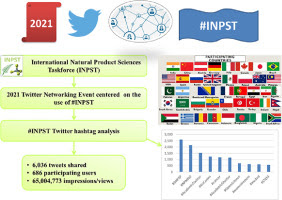
The use of this hashtag during the networking event period was analyzed with Symplur Signals (https://www.symplur.com/), revealing a total of 6,036 tweets, shared by 686 users, which generated a total of 65,004,773 impressions (views of the respective tweets). This networking event's achieved high visibility and participation rate showcases a convincing example of how this social media platform can be used as a highly effective tool to host virtual Twitter-based international biomedical research events.


Saturday, 14 January 2023

Icariin: A Promising Natural Product in Biomedicine and Tissue Engineering

 J. Funct. Biomater. 2023, 14(1), 44


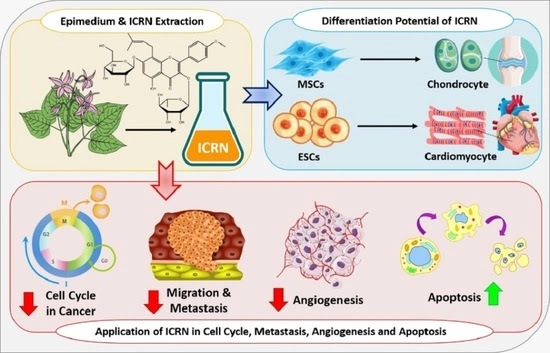
Among scaffolds used in tissue engineering, natural biomaterials such as plant-based materials show a crucial role in cellular function due to their biocompatibility and chemical indicators. Because of environmentally friendly behavior and safety, green methods are so important in designing scaffolds. A key bioactive flavonoid of the Epimedium plant, Icariin (ICRN), has a broad range of applications in improving scaffolds as a constant and non-immunogenic material, and in stimulating the cell growth, differentiation of chondrocytes as well as differentiation of embryonic stem cells towards cardiomyocytes. Moreover, fusion of ICRN into the hydrogel scaffolds or chemical crosslinking can enhance the secretion of the collagen matrix and proteoglycan in bone and cartilage tissue engineering. To scrutinize, in various types of cancer cells, ICRN plays a decisive role through increasing cytochrome c secretion, Bax/Bcl2 ratio, poly (ADP-ribose) polymerase as well as caspase stimulations. Surprisingly, ICRN can induce apoptosis, reduce viability and inhibit proliferation of cancer cells, and repress tumorigenesis as well as metastasis. Moreover, cancer cells no longer grow by halting the cell cycle at two checkpoints, G0/G1 and G2/M, through the inhibition of NF-κB by ICRN. Besides, improving nephrotoxicity occurring due to cisplatin and inhibiting multidrug resistance are the other applications of this biomaterial.


Friday, 13 January 2023

Structures and Functions of Cuticular Wax in Postharvest Fruit and Its Regulation: A Comprehensive Review with Future Perspectives

 Engineering, 2023


Cuticular wax plays a major role in the growth and storage of plant fruits. The cuticular wax coating, which covers the outermost layer of a fruit’s epidermal cells, is insoluble in water. Cuticular wax is mainly composed of very long-chain fatty acids (VLCFAs); their derivatives, including esters, primary alcohols, secondary alcohols, aldehydes, and ketones; and triterpenoids. This complex mixture of lipids is probably biosynthesized in the epidermal cells of most plants and exuded onto the surface. Cuticular wax not only makes the fruit less susceptible to microbial infection but also reduces mechanical damage to the fruit, thereby maintaining the fruit’s commodity value. To date, research has mostly focused on the changes, function, and regulation of fruit wax before harvest, while ignoring the changes and functions of wax in fruit storage. This paper reviews on the composition, structure, and metabolic regulation of cuticular wax in fruits. It also focuses on postharvest factors affecting wax composition, such as storage temperature, relative humidity (RH), gas atmosphere, and as well as exogenous hormones, and the effects of wax on fruit postharvest quality, including water dispersion, fruit softening, physiological disorders, and disease resistance. These summaries may be of assistance in better understanding the changes in cuticular wax in postharvest fruit and the resulting effects on fruit quality.


Thursday, 12 January 2023

Targeting of neuroinflammation by glibenclamide in Covid-19: old weapon from arsenal

 Inflammopharmacology, 31, 1-7 (2023)


In coronavirus disease 2019 (Covid-19) era, neuroinflammation may develop due to neuronal tropism of severe acute respiratory syndrome coronavirus type 2 (SARS-CoV-2) and/or associated immune activation, cytokine storm, and psychological stress. SARS-CoV-2 infection and linked cytokine storm may cause blood–brain barrier (BBB) injury through which activated immune cells and SARS-CoV-2 can pass into the brain causing activation of glial cells with subsequent neuroinflammation. Different therapeutic regimens were suggested to alleviate Covid-19-induced neuroinflammation. Since glibenclamide has anti-inflammatory and neuroprotective effects, it could be effective in mitigation of SARS-CoV-2 infection-induced neuroinflammation. Glibenclamide is a second-generation drug from the sulfonylurea family, which acts by inhibiting the adenosine triphosphate (ATP)-sensitive K channel in the regulatory subunit of type 1 sulfonylurea receptor (SUR-1) in pancreatic β cells. Glibenclamide reduces neuroinflammation and associated BBB injury by inhibiting the nod-like receptor pyrin 3 (NLRP3) inflammasome, oxidative stress, and microglial activation. Therefore, glibenclamide through inhibition of NLRP3 inflammasome, microglial activation, and oxidative stress may attenuate SARS-CoV-2-mediated neuroinflammation.


Wednesday, 11 January 2023

The International Natural Product Sciences Taskforce (INPST) and the power of Twitter networking exemplified through #INPST hashtag analysis

 Phytomed. 108, 154520, 2023


Background

The development of digital technologies and the evolution of open innovation approaches have enabled the creation of diverse virtual organizations and enterprises coordinating their activities primarily online. The open innovation platform titled “International Natural Product Sciences Taskforce” (INPST) was established in 2018, to bring together in collaborative environment individuals and organizations interested in natural product scientific research, and to empower their interactions by using digital communication tools.

Methods

In this work, we present a general overview of INPST activities and showcase the specific use of Twitter as a powerful networking tool that was used to host a one-week “2021 INPST Twitter Networking Event” (spanning from 31st May 2021 to 6th June 2021) based on the application of the Twitter hashtag #INPST.

Results and Conclusion

The use of this hashtag during the networking event period was analyzed with Symplur Signals (https://www.symplur.com/), revealing a total of 6,036 tweets, shared by 686 users, which generated a total of 65,004,773 impressions (views of the respective tweets). This networking event's achieved high visibility and participation rate showcases a convincing example of how this social media platform can be used as a highly effective tool to host virtual Twitter-based international biomedical research events.

Tuesday, 10 January 2023

Effects of alginates on the growth, haematological, immunity, antioxidant and pro-inflammatory responses of rabbits under high temperature

 Res. Vet. Sci. 155, 36-43, 2023


Heat stress (HS) is one of the most severe hurdles impacting rabbit growth, immunity, homeostasis, and productivity. Alginate oligosaccharides (AOS) have considerable beneficial effects due to their plausible antioxidant and immune-stimulatory properties. This work was planned to explore the preventive function of AOS as a new bio-feed additive against the harmful effects caused by environmental HS on growing rabbits. Rabbits were allotted in four experimental groups (25 animals in each group) and fed on a basal diet supplemented with 0.0 (AOS0), 50 (AOS50), 100 (AOS100), and 150 (AOS150) mg AOS/kg diet reared under summer conditions. Dietary AOS supplementation improved significantly (P ≤ 0.001) feed conversion rate, while both AOS100 and AOS150 significantly (P ≤ 0.001) enhanced the final body weight and body weight gain. All AOS addition significantly increased nitric oxide and lysosome activity and significantly reduced interferon-gamma (IFNγ) compared with those in the control group. Tumor necrosis factor α (TNFα), interleukin1β (IL-1β), myeloperoxidase and protein carbonyl levels were significantly reduced in rabbits fed diets containing AOS (100 and 150 mg/kg) compared with those in the control group under heat stress conditions. In addition, glutathione (GSH) and catalase (CAT) were significantly (P ≤ 0.001) improved with increasing AOS dietary levels compared with the control group. Still, total antioxidant capacity (TAC), malondialdehyde (MDA), hematocrit, mean corpuscular volume (MCV), eosinophils, and lymphocytes did not change. Erythrocyte's indices improved significantly (P ≤ 0.001), while neutrophils and white blood cell counts were decreased by dietary AOS inclusion. Immunological (IgM and IgG) were markedly reduced in AOS-treated groups compared with the control group. The current investigation exemplified that AOS as a novel bio-feed additive that could be an effective strategy to extenuate prejudicial effects in heat-stressed rabbits via enhancing immunity, and antioxidant defence system, further regulating the inflammation cytokines.

Monday, 9 January 2023

Classification and authentication of tea according to their harvest season based on FT-IR fingerprinting using pattern recognition methods

 J. Food Comp. Anal. 115, 104995 (2023)


The potential of FT-IR spectral fingerprinting was investigated to classify tea samples based on the harvest season (May and September). Tea samples were collected from five geographical regions (north of Iran) during the harvesting period 2019–2020. Principal component analysis (PCA), principal component analysis-linear discriminant analysis (PCA-LDA) and partial least square-linear discriminant analysis (PLS-LDA) were employed in order to assess the feasibility of discrimination of tea samples based on their harvest season using their FT-IR spectral data. The results showed that the tea samples from two harvest seasons can be identified based on FT-IR spectral fingerprints. All calibration samples were correctly classified (100.0 %) by the PCA-LDA and PLS-LDA models using leave-one-out cross validation. The mean sensitivity and specificity (for prediction set) were both 98.6 % for PCA-LDA model and 100.0 % for PLS-LDA mode. A high percentage of correct classifications for the training set shows the strong relationship between the FT-IR spectral fingerprinting and the harvest season, while the satisfactory results for the prediction set demonstrates the ability to identify the harvest season of an unknown tea sample based on its FT-IR spectral data.


Sunday, 8 January 2023

Fatty acids in seed oil of wild and cultivated rosehip (Rosa canina L.) from different locations in Serbia

 Ind. Crop Prod. 191 B, 115797, 2023


Rosehip (Rosa canina L.) seeds are rich in bioactive compounds and nutrients and hence with a great potential to be employed in production of functional foods. This work aimed to evaluate the fatty acid composition of seed oil from wild and cultivated rosehip collected at different locations in the Republic of Serbia. Unsaturated fatty acids were dominant in majority of seed oil samples, with linoleic (LA), α-linolenic (ALA) and oleic (OA) acids (24.53–46.68 %, 4.73–12.39 % and 3.89–13.82 %, respectively) as the most abundant ones. Based on the analyses of most dominant bands in Raman spectra of seeds (∼1265 and ∼1660 cm-1) characteristic for unsaturated fatty acids, ANOVA revealed significantly higher content in two seed samples (5SW and 10SC). Ratios of UFAs/ SFAs, ω-6/ω-3 and LA/ALA and desirable fatty acids (DFA) indicated that most studied rosehip seed oils showed good quality. Factors such as genetic characteristics and agro-ecological conditions most likely affected FAs composition of seed oils.


Saturday, 7 January 2023

Potential of essential oils for protection of Couscous against Aspergillus flavus and aflatoxin B1 contamination

 Food Control, 145, 109474, 2023


Our study was aimed to evaluate antifungal, antiaflatoxin, and antioxidant potential of Mentha pulegium, Myrtus communis, and Mentha piperita essential oils (EOs). The EOs showed efficacy as a couscous preservative. A total of 387 fungal species were isolated from Couscous samples, with Aspergillus flavus BN (20) which is identified as the highest aflatoxin producer. The minimum inhibitory concentration (MIC) of M. pulegium and M. communis EOs against the toxigenic strain of A. flavus BN (20) determined to be 4.00 μL/mL, whereas the MIC of M. piperita was 3.50 μL/mL. The EOs inhibited the aflatoxin B1 production at lower concentrations. The EOs showed fungitoxicity against wide-ranging of fungi and high antioxidant activity. The IC50 value of the oils ranged between 3.27 and 4.31 μL/mL. EOs may be able to contribute preservation of food commodities against quantitative and qualitative losses. During fumigation assays in Algerian traditional food system (Couscous), the three EOs showed protection of Couscous from A. flavus contamination indicating their efficacy as sustainable fumigant in food systems.


Friday, 6 January 2023

Application of fermentation for the valorization of residues from Cactaceae family

 Food Chem. 410, 135369, 2023


Cactaceae family is well-known for their adaptations to drought and arid environments. This family, formed by four subfamilies (Cactoideae, Opuntioideae, Pereskioideae, and Maihuenioideae) are known for being leafless stem succulent plants with numerous spines, and their commercial fruits, distinguished by their bright colors and their skin covered with bracts. Some of these species have been traditionally used in the food industry (e.g., pitaya, cactus, or prickly pear) or as pharmaceuticals to treat specific diseases due to their active properties. The processing of these fruits leads to different residues, namely pomace, skin, spines, and residues from cladodes; besides from others such as fruits, roots, flowers, mucilage, and seeds. In general, Cactaceae species produce large amounts of mucilage and fiber, although they can be also considered as a source of phenolic compounds (phenolic acids, flavonols and their glycosides), alkaloids (phenethylamines derived betalains), and triterpenoids. Therefore, considering their high content in fiber and fermentable carbohydrates, together with other target bioactive compounds, fermentation is a potential valorization strategy for certain applications such as enzymes and bioactive compounds production or aroma enhancement. This review will comprise the latest information about Cactaceae family, its potential residues, and its potential as a substrate for fermentation to obtain active molecules with application in the food industry.


Thursday, 5 January 2023

Fatty acids in seed oil of wild and cultivated rosehip (Rosa canina L.) from different locations in Serbia

 Ind. Crop Prod. 191, Part B, 115797, 2023


Rosehip (Rosa canina L.) seeds are rich in bioactive compounds and nutrients and hence with a great potential to be employed in production of functional foods. This work aimed to evaluate the fatty acid composition of seed oil from wild and cultivated rosehip collected at different locations in the Republic of Serbia. Unsaturated fatty acids were dominant in majority of seed oil samples, with linoleic (LA), α-linolenic (ALA) and oleic (OA) acids (24.53–46.68 %, 4.73–12.39 % and 3.89–13.82 %, respectively) as the most abundant ones. Based on the analyses of most dominant bands in Raman spectra of seeds (∼1265 and ∼1660 cm-1) characteristic for unsaturated fatty acids, ANOVA revealed significantly higher content in two seed samples (5SW and 10SC). Ratios of UFAs/ SFAs, ω-6/ω-3 and LA/ALA and desirable fatty acids (DFA) indicated that most studied rosehip seed oils showed good quality. Factors such as genetic characteristics and agro-ecological conditions most likely affected FAs composition of seed oils.

Wednesday, 4 January 2023

Two Years of Life for a New Journal: Compounds

 Compounds 2023, 3, 37-39


The present year marked the third year of Compounds (ISSN 2673-6918), which was born in 2021 with the aim of providing a platform for the communication of scientific achievements in the field of the synthesis, characterization, and properties of chemical compounds from both a theoretical point of view as experimental.

During its first two years, the articles published in Compounds were viewed more than 60,000 times, which demonstrates the impact that our journal is amassing among the scientific community. These data stem from article metrics available on the MPDI publishing platform, where multiple requests originating from the same IP address are counted as one view/download. On the other hand, according to Crossref, the articles that we have published already have fifty citations.

Tuesday, 3 January 2023

Classification and authentication of tea according to their harvest season based on FT-IR fingerprinting using pattern recognition methods

 J. Food Comp. Anal. 115, 104995, 2023


The potential of FT-IR spectral fingerprinting was investigated to classify tea samples based on the harvest season (May and September). Tea samples were collected from five geographical regions (north of Iran) during the harvesting period 2019–2020. Principal component analysis (PCA), principal component analysis-linear discriminant analysis (PCA-LDA) and partial least square-linear discriminant analysis (PLS-LDA) were employed in order to assess the feasibility of discrimination of tea samples based on their harvest season using their FT-IR spectral data. The results showed that the tea samples from two harvest seasons can be identified based on FT-IR spectral fingerprints. All calibration samples were correctly classified (100.0 %) by the PCA-LDA and PLS-LDA models using leave-one-out cross validation. The mean sensitivity and specificity (for prediction set) were both 98.6 % for PCA-LDA model and 100.0 % for PLS-LDA mode. A high percentage of correct classifications for the training set shows the strong relationship between the FT-IR spectral fingerprinting and the harvest season, while the satisfactory results for the prediction set demonstrates the ability to identify the harvest season of an unknown tea sample based on its FT-IR spectral data.


Monday, 2 January 2023

Potential of essential oils for protection of Couscous against Aspergillus flavus and aflatoxin B1 contamination

Food Control, 145, 109474, 2023


Our study was aimed to evaluate antifungal, antiaflatoxin, and antioxidant potential of Mentha pulegium, Myrtus communis, and Mentha piperita essential oils (EOs). The EOs showed efficacy as a couscous preservative. A total of 387 fungal species were isolated from Couscous samples, with Aspergillus flavus BN (20) which is identified as the highest aflatoxin producer. The minimum inhibitory concentration (MIC) of M. pulegium and M. communis EOs against the toxigenic strain of A. flavus BN (20) determined to be 4.00 μL/mL, whereas the MIC of M. piperita was 3.50 μL/mL. The EOs inhibited the aflatoxin B1 production at lower concentrations. The EOs showed fungitoxicity against wide-ranging of fungi and high antioxidant activity. The IC50 value of the oils ranged between 3.27 and 4.31 μL/mL. EOs may be able to contribute preservation of food commodities against quantitative and qualitative losses. During fumigation assays in Algerian traditional food system (Couscous), the three EOs showed protection of Couscous from A. flavus contamination indicating their efficacy as sustainable fumigant in food systems.


Sunday, 1 January 2023

A selective turn-on fluorescent chemosensor 1,1-diaminoazine for azinphos-methyl

 J. Photochem. Photobiol A: Chem. 437, 114476, 2023


Detection of organophosphorus pesticides (OPPs) is an important challenge in environmental chemistry, because their exposure to humans can cause severe health problems. In the current study, organic nanoparticles of (E)-(4-chlorophenyl)-1,1-diamino-2,3-diazabutadiene were developed using eco-friendly approach which was found to be in the range of 15–20 nm. These synthesized species exhibited both U.V. Visible and “turn-on” fluorescence responses in aqueous media for the selective detection of the extremely hazardous pesticide azinphos-methyl. These organic nanoparticles also exhibit a good linear relationship in the range of 1–100 μM and the limit of detection (LOD) is 7.4 µM. The selective fluorescence response was also observed in RO water, tap water and orange juice. The FT-IR and DFT studies helped in identifying the specific H-bonding interactions responsible for the selective detection of Azinphos-methyl.


Wednesday, 14 December 2022

Global Solar Irradiation Modelling and Prediction Using Machine Learning Models for Their Potential Use in Renewable Energy Applications

 Mathematics 2022, 10(24), 4746


Global solar irradiation is an important variable that can be used to determine the suitability of an area to install solar systems; nevertheless, due to the limitations of requiring measurement stations around the entire world, it can be correlated with different meteorological parameters. To confront this issue, different locations in Rias Baixas (Autonomous Community of Galicia, Spain) and combinations of parameters (month and average temperature, among others) were used to develop various machine learning models (random forest -RF-, support vector machine -SVM- and artificial neural network -ANN-). These three approaches were used to model and predict (one month ahead) monthly global solar irradiation using the data from six measurement stations. Afterwards, these models were applied to seven different measurement stations to check if the knowledge acquired could be extrapolated to other locations. In general, the ANN models offered the best results for the development and testing phases of the model, as well as for the phase of knowledge extrapolation to other locations. In this sense, the selected ANNs obtained a mean absolute percentage error (MAPE) value between 3.9 and 13.8% for the model development and an overall MAPE between 4.1 and 12.5% for the other seven locations. ANNs can be a capable tool for modelling and predicting monthly global solar irradiation in areas where data are available and for extrapolating this knowledge to nearby areas.


Monday, 12 December 2022

Host–Guest Complexes

 Int. J. Mol. Sci. 2022, 23(24), 15730


This article belongs to the Special Issue Host-Guest Complexes and corresponds with the special issue editorial. In this Special Issue, we hope to address both the structural aspects of the formation and stability of these inclusion complexes as well as the energetic aspects associated with them, together with the different instrumental techniques used to characterise them, addressing the aspects related to molecular recognition and conformational switching. Of course, we must also take into account the aspects related to the technological applications of these compounds. In fact, they show important potentialities in topics such as superconductivity phenomena, the design of sensors, and food chemistry, agricultural chemistry, or their applications in matters of the environment.

Friday, 2 December 2022

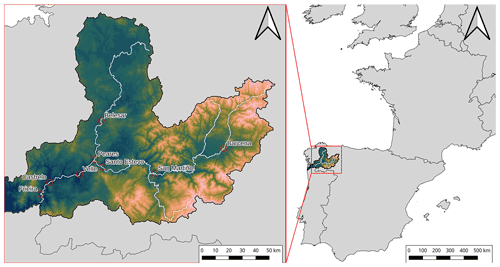
Comparison of machine learning techniques for reservoir outflow forecasting

 Nat. Hazards Earth Syst. Sci., 22, 3859–3874, 2022


Reservoirs play a key role in many human soci- eties due to their capability to manage water resources. In addition to their role in water supply and hydropower pro- duction, their ability to retain water and control the flow makes them a valuable asset for flood mitigation. This is a key function, since extreme events have increased in the last few decades as a result of climate change, and therefore, the application of mechanisms capable of mitigating flood dam- age will be key in the coming decades. Having a good esti- mation of the outflow of a reservoir can be an advantage for water management or early warning systems. When histori- cal data are available, data-driven models have been proven a useful tool for different hydrological applications. In this sense, this study analyzes the efficiency of different machine learning techniques to predict reservoir outflow, namely mul- tivariate linear regression (MLR) and three artificial neu- ral networks: multilayer perceptron (MLP), nonlinear au- toregressive exogenous (NARX) and long short-term mem- ory (LSTM). These techniques were applied to forecast the outflow of eight water reservoirs of different characteristics located in the Miño River (northwest of Spain). In general, the results obtained showed that the proposed models pro- vided a good estimation of the outflow of the reservoirs, im- proving the results obtained with classical approaches such as to consider reservoir outflow equal to that of the previous day. Among the different machine learning techniques anaAbstract. Reservoirs play a key role in many human soci- eties due to their capability to manage water resources. In addition to their role in water supply and hydropower pro- duction, their ability to retain water and control the flow makes them a valuable asset for flood mitigation. This is a key function, since extreme events have increased in the last few decades as a result of climate change, and therefore, the application of mechanisms capable of mitigating flood dam- age will be key in the coming decades. Having a good esti- mation of the outflow of a reservoir can be an advantage for water management or early warning systems. When histori- cal data are available, data-driven models have been proven a useful tool for different hydrological applications. In this sense, this study analyzes the efficiency of different machine learning techniques to predict reservoir outflow, namely mul- tivariate linear regression (MLR) and three artificial neu- ral networks: multilayer perceptron (MLP), nonlinear au- toregressive exogenous (NARX) and long short-term mem- ory (LSTM). These techniques were applied to forecast the outflow of eight water reservoirs of different characteristics located in the Miño River (northwest of Spain). In general, the results obtained showed that the proposed models pro- vided a good estimation of the outflow of the reservoirs, im- proving the results obtained with classical approaches such as to consider reservoir outflow equal to that of the previous day. Among the different machine learning techniques analyzed, the NARX approach was the option that provided the best estimations on average.


Thursday, 1 December 2022

Prospecting the role of nanotechnology in extending the shelf-life of fresh produce and in developing advanced packaging

 Food Packaging and Shelf Life, 34, 100955, 2022


Fruits and vegetables contain excellent amounts of nutritional and bioactive compounds. The maintenance their shelf-life and prevention from decay, quality deterioration, and microbial spoilage of the fresh produce are the major challenges for food processing industries. Several techniques such as physical, chemical, and bio-preservation are used to extend the shelf-life of fresh produce. However, these techniques could not fully sustain because of their higher cost, and side-effects. In past few decades, nanotechnology came into existence, which provides a green, novel and cutting-edge solution to preserve fresh produce. Organic, inorganic, and combined engineered nanomaterials (nano-particles, nano-composites, nano-emulsion, nano-tracers, nano-packaging, and nano-sensors) are broadly used in shelf-life improvement of fresh produce because of their broad surface to volume ratio, higher barrier property, and better antimicrobial spectrum. This review comprehensively discusses various methods, components, and roles of nanotechnology for extending the shelf-life of fresh produce and scope of developing advanced packaging.