Tuesday, 26 July 2022
Advances on Natural Abietane, Labdane and Clerodane Diterpenes as Anti-Cancer Agents: Sources and Mechanisms of Action
Tuesday, 12 July 2022
Essential oils nano-emulsion confers resistance against Penicillium digitatum in 'Newhall' navel orange by promoting phenylpropanoid metabolism
Industrial Crops and Products, 187(A), 115297, 2022
Friday, 8 July 2022
The influence of phytochemicals on cell heterogeneity in chronic inflammation-associated diseases: the prospects of single cell sequencing
The Journal of Nutritional Biochemistry, 108, 109091, 2022
Friday, 1 July 2022
Biological properties and potential of compounds extracted from red seaweeds
Macroalgae have been recently used for different applications in the food, cosmetic and pharmaceutical industry since they do not compete for land and freshwater against other resources. Moreover, they have been highlighted as a potential source of bioactive compounds. Red algae (Rhodophyta) are the largest group of seaweeds, including around 6000 different species, thus it can be hypothesized that they are a potential source of bioactive compounds. Sulfated polysaccharides, mainly agar and carrageenans, are the most relevant and exploited compounds of red algae. Other potential molecules are essential fatty acids, phycobiliproteins, vitamins, minerals, and other secondary metabolites. All these compounds have been demonstrated to exert several biological activities, among which antioxidant, anti-inflammatory, antitumor, and antimicrobial properties can be highlighted. Nevertheless, these properties need to be further tested on in vivo experiments and go in-depth in the study of the mechanism of action of the specific molecules and the understanding of the structure–activity relation. At last, the extraction technologies are essential for the correct isolation of the molecules, in a cost-effective way, to facilitate the scale-up of the processes and their further application by the industry. This manuscript is aimed at describing the fundamental composition of red algae and their most studied biological properties to pave the way to the utilization of this underused resource.
Wednesday, 29 June 2022
Fu Brick Tea Manages HFD/STZ-Induced Type 2 Diabetes by Regulating the Gut Microbiota and Activating the IRS1/PI3K/Akt Signaling Pathway
J. Agric. Food Chem. 2022, 70, 27, 8274–8287
Monday, 27 June 2022
Application of Protein in Extrusion-Based 3D Food Printing: Current Status and Prospectus
Friday, 10 June 2022
Lobularia libyca: Phytochemical Profiling, Antioxidant and Antimicrobial Activity Using In Vitro and In Silico Studies
Saturday, 4 June 2022
Nano-priming as emerging seed priming technology for sustainable agriculture—recent developments and future perspectives
Journal of Nanobiotechnology 20, 254 (2022)
Friday, 3 June 2022
Novel hydrophobic colorimetric films based on ethylcellulose/castor oil/anthocyanins for pork freshness monitoring
Wednesday, 1 June 2022
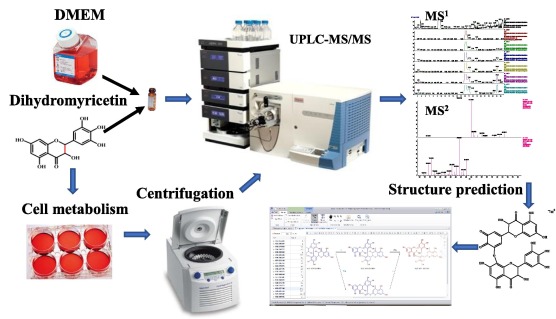
Stability profiling and degradation products of dihydromyricetin in Dulbecco's modified eagle's medium
Dihydromyricetin has shown many bioactivities in cell level. However, dihydromyricetin was found to be highly instable in cell culture medium DMEM. Here, the underlying degradation mechanism was investigated via UPLC-MS/MS analysis. Dihydromyricetin was mainly converted into its dimers and oxidized products. At lower temperature, dihydromyricetin in DMEM showed higher stability. Vitamin C increased the stability of dihydromyricetin in DMEM probably due to its high antioxidant potential.
Monday, 30 May 2022
A high-stable and sensitive colorimetric nanofiber sensor based on PCL incorporating anthocyanins for shrimp freshness
Wednesday, 18 May 2022
Green Synthesis of Silver Nanoparticles Using Allium cepa var. Aggregatum Natural Extract: Antibacterial and Cytotoxic Properties
Nanomaterials 2022, 12(10), 1725
Friday, 13 May 2022
Nutmeg (Myristica fragrans Houtt.) essential oil: A review on its composition, biological, and pharmacological activities
Phytotherapy Research, 36, 2839-2851, 2022
Myristica fragrans (Houtt.) is an evergreen tree native to the Maluku Islands, Indonesia. M. fragrans kernel is extensively used in Indian traditional medicines to treat various diseases. Several studies attempt to compile and interpret the pharmacological potential of Myristica fragrans (Houtt.) aqueous and various chemical extracts. Thus, the pharmacological potential of nutmeg essential oil has not been reviewed phytochemically and pharmacologically. Therefore, the present study aimed to share appropriate literature evidence regarding the plant essential oil chemical composition and therapeutic potential of Myristica fragrans essential oil (MFEO). MFEO of leaf, mace, kernel, and seed were used worldwide as potential Ayurvedic medicine and fragrance. MFEO extracted by various methods and oil yield was 0.7–3.2, 8.1–10.3, 0.3–12.5, and 6.2–7.6% in leaf, mace, seed, and kernel. The primary chemical constituents of MFEO were sabinene, eugenol, myristicin, caryophyllene, β-myrcene, and α-pinene. Clinical and experimental investigations have confirmed the antioxidant, antimicrobial, antiinflammatory, anticancer, antimalarial, anticonvulsant, hepatoprotective, antiparasitic, insecticidal, and nematocidal activities of MFEO. It is the first attempt to compile oil yield, composition, and the biological activities of MFEO. In future, several scientific investigations are required to understand the mechanism of action of MFEO and their bioactive constituents.
Wednesday, 11 May 2022
Fruit Juice Industry Wastes as a Source of Bioactives
J. Agric. Food Chem. 2022, 70, 23, 6805–6832
Tuesday, 10 May 2022
Recent Development in Antioxidant Peptides of Woody Oil Plant By-Products
Monday, 2 May 2022
Volatile Flavor Compounds of Pugionium cornutum (L.) Gaertn. Before and After Different Dehydration Treatments
Sunday, 1 May 2022
The reciprocal interaction between polyphenols and other dietary compounds: Impact on bioavailability, antioxidant capacity and other physico-chemical and nutritional parameters
Food Chem. 375, 131904, (2022)
Thursday, 28 April 2022
Humic Acids Aggregates as Microheterogeneous Reaction Media: Alkaline Hydrolysis Reactions
The influence of humic aggregates in a water solution upon the chemical stability under basic conditions of different substrates was reviewed. The kinetic behavior of each substrate was modeled in terms of a micellar pseudophase model.
Wednesday, 27 April 2022
Reactivity of a Recombinant Esterase from Thermus thermophilus HB27 in Aqueous and Organic Media
Microorganisms 2022, 10(5), 915
Tuesday, 26 April 2022
Genetic variability, combining ability and molecular diversity-based parental line selection for heterosis breeding in field corn (Zea mays L.)
Mol Biol Rep 49, 4517–4524 (2022)