Wednesday, 23 March 2022

Anti-Depressant Properties of Crocin Molecules in Saffron

Molecules 2022, 27(7), 2076


Saffron is a valued herb, obtained from the stigmas of the C. sativus Linn (Iridaceae), with therapeutic effects. It has been described in pharmacopoeias to be variously acting, including as an anti-depressant, anti-carcinogen, and stimulant agent. The therapeutic effects of saffron are harbored in its bioactive molecules, notably crocins, the subject of this paper. Crocins have been demonstrated to act as a monoamine oxidase type A and B inhibitor. Furthermore, saffron petal extracts have experimentally been shown to impact contractile response in electrical field stimulation. Other research suggests that saffron also inhibits the reuptake of monoamines, exhibits N-methyl-d-aspartate antagonism, and improves brain-derived neurotrophic factor signaling. A host of experimental studies found saffron/crocin to be similarly effective as fluoxetine and imipramine in the treatment of depression disorders. Saffron and crocins propose a natural solution to combat depressive disorders. However, some hurdles, such as stability and delivery, need to be overcome.


Tuesday, 15 March 2022

Natural Polyphenols for the Preservation of Meat and Dairy Products

 Molecules 2022, 27(6), 1906


Food spoilage makes foods undesirable and unacceptable for human use. The preservation of food is essential for human survival, and different techniques were initially used to limit the growth of spoiling microbes, e.g., drying, heating, salting, or fermentation. Water activity, temperature, redox potential, preservatives, and competitive microorganisms are the most important approaches used in the preservation of food products. Preservative agents are generally classified into antimicrobial, antioxidant, and anti-browning agents. On the other hand, artificial preservatives (sorbate, sulfite, or nitrite) may cause serious health hazards such as hypersensitivity, asthma, neurological damage, hyperactivity, and cancer. Thus, consumers prefer natural food preservatives to synthetic ones, as they are considered safer. Polyphenols have potential uses as biopreservatives in the food industry, because their antimicrobial and antioxidant activities can increase the storage life of food products. The antioxidant capacity of polyphenols is mainly due to the inhibition of free radical formation. Moreover, the antimicrobial activity of plants and herbs is mainly attributed to the presence of phenolic compounds. Thus, incorporation of botanical extracts rich in polyphenols in perishable foods can be considered since no pure polyphenolic compounds are authorized as food preservatives. However, individual polyphenols can be screened in this regard. In conclusion, this review highlights the use of phenolic compounds or botanical extracts rich in polyphenols as preservative agents with special reference to meat and dairy products.

Saturday, 12 March 2022

Ethnobotanical and phytochemical aspects of the edible herb Coriandrum sativum L.

 Journal of Food Science, 87(4), 2022, 1386-1422


Coriandrum sativum (coriander) is an edible herb in the family Apiaceae. The leaves, fruits, and stems of C. sativum have long been used as culinary spice due to their favorable odor. Traditional practitioners used this plant for treating different diseases like blepharitis, scabies, aphthous stomatitis, laryngitis, headache, and palpitation. In modern researches, coriander has demonstrated anxiolytic, anticonvulsant, antimigraine, neuroprotective, analgesic, diuretic, hypoglycemic, hypolipidemic, hypotensive, anticancer, and antioxidant activities. Coriander contains a wide range of bioactive phytochemicals among which phenylpropenes, terpenoids, isocoumarins, phytosterols, and fatty acids are the most important. This review provides information about the botanical and ethnobotanical aspects, chemical profile, therapeutic uses in Islamic traditional medicine (ITM), and recent pharmacological studies of coriander effects. The results have shown that coriander and its monoterpenoid compound, linalool, can be considered as potential drug candidates for treating metabolic syndrome and different inflammatory conditions especially neural and CNS diseases.


Friday, 4 March 2022

Unravelling the immunomodulatory role of apple phenolic rich extracts on human THP-1- derived macrophages using multiplatform metabolomics

Food Res. Int. 155, 111037, 2022


Apples represent a significant source of dietary phenolic compounds with evidenced anti-inflammatory and immunomodulatory activities. Nevertheless, the effect of the whole apple matrix on human macrophages is unknown. In this context, our study attempts to evaluate the effect of apple-derived phenolic compounds-rich extracts (pulp, peel and leaf) on IL-1β production in THP-1-differentiated macrophages and derived metabolic alterations through untargeted metabolomics. Our results have showed that apple pulp treatment inhibited the release of the pro-inflammatory cytokine IL-1β induced by LPS in THP-1 macrophages by ELISA analysis. Metabolomics demonstrate that different proportions of phenolic compounds led to differential alterations in the metabolism of THP-1 macrophages. Indeed, apple extracts promoted alterations in lipid, carbohydrate, amino acid and vitamins as well as cofactors metabolism. Specifically, leaf extracts were characterized by alteration of galactose metabolism while the extracts derived from the fruit showed predominant alterations in lipids metabolism. All extracts mimicked the response observed under normal conditions in LPS-stimulated macrophages, inhibiting LPS response. Thus, the phenolic enriched extracts from apples will be a good source of natural compounds with a beneficial effect against inflammation, and they may be applied as a food supplement and/or functional ingredient for the treatment of inflammatory diseases.


Thursday, 3 March 2022

Morus alba L. (Sangzhi) Alkaloids Promote Insulin Secretion, Restore Diabetic β-Cell Function by Preventing Dedifferentiation and Apoptosis

 Front. Pharmacol.,  Sec. Ethnopharmacology, 2022


Background: 
Morus alba L. (Sangzhi) alkaloids (SZ-A), extracted from the Chinese herb Morus alba L. (mulberry twig), have been shown to ameliorate hyperglycemia in type 2 diabetes and have been approved for diabetes treatment in the clinic. However, their versatile pharmacologic effects and regulatory mechanisms are not yet completely understood.

Purpose: 
This study explored the protective effects of SZ-A on islet β cells and the underlying mechanism.

Methods: 
Type 2 diabetic KKAy mice were orally administered SZ-A (100 or 200 mg/kg, once daily) for 11 weeks, and oral glucose tolerance, insulin tolerance, intraperitoneal glucose tolerance and hyperglycemia clamp tests were carried out to evaluate the potency of SZ-A in vivo. The morphology and β-cell dedifferentiation marker of KKAy mouse islets were detected via immunofluorescence. The effect of SZ-A on glucose-stimulated insulin secretion was investigated in both the islet β-cell line MIN6 and mouse primary islets. Potential regulatory signals and pathways in insulin secretion were explored, and cell proliferation assays and apoptosis TUNEL staining were performed on SZ-A-treated MIN6 cells.

Results: 
SZ-A alleviated hyperglycemia and glucose intolerance in type 2 diabetic KKAy mice and improved the function and morphology of diabetic islets. In both MIN6 cells and primary islets, SZ-A promoted insulin secretion. At a normal glucose level, SZ-A decreased AMPKα phosphorylation, and at high glucose, SZ-A augmented the cytosolic calcium concentration. Additionally, SZ-A downregulated the β-cell dedifferentiation marker ALDH1A3 and upregulated β-cell identifying genes, such as Ins1, Ins2, Nkx2.2 and Pax4 in KKAy mice islets. At the same time, SZ-A attenuated glucolipotoxicity-induced apoptosis in MIN6 cells, and inhibited Erk1/2 phosphorylation and caspase 3 activity. The major active fractions of SZ-A, namely DNJ, FAG and DAB, participated in the above regulatory effects.

Conclusion:
Our findings suggest that SZ-A promotes insulin secretion in islet β cells and ameliorates β-cell dysfunction and mass reduction under diabetic conditions both in vivo and in vitro, providing additional supportive evidence for the clinical application of SZ-A.


Tuesday, 1 March 2022

Simultaneous determination of ten nucleosides and bases in Ganoderma by micellar electrokinetic chromatography

 Food Science and Human Wellness, 11 (2), 263-268, 2022


Ganoderma (lingzhi) is a famous herbal medicine and edible supplement in oriental countries for a long history. In this study, a simple micellar electrokinetic chromatography (MEKC) method was established for the analysis of nucleosides and bases, the major bioactive components in Ganoderma for the first time. By optimizing the borate concentration, the sodium dodecyl sulfate (SDS) concentration and the pH value of running buffer, 10 nucleosides and bases achieved an ideal separation. In real sample analysis, the developed method was successfully used to determine the 10 target analytes in 23 batches of Ganoderma samples from different regions. Results indicated that contents of 10 investigated analytes in each sample showed obvious variation. The principal components analysis (PCA) and hierarchical cluster analysis (HCA) analysis classified the samples into three groups, and the HCA tree visualized the relationships which was mainly contributed by geographical partition. The results indicated geographical origin to be an important factor that affect the accumulation of nucleosides and bases in Ganoderma. In summary, this study provides a simple and practical strategy for quality assessment and cultivation reference of Ganoderma.


Thursday, 24 February 2022

Antidiabetic Phytochemicals From Medicinal Plants: Prospective Candidates for New Drug Discovery and Development

 Front. Endocrinol., 2022


Diabetes, a chronic physiological dysfunction affecting people of different age groups and severely impairs the harmony of peoples’ normal life worldwide. Despite the availability of insulin preparations and several synthetic oral antidiabetic drugs, there is a crucial need for the discovery and development of novel antidiabetic drugs because of the development of resistance and side effects of those drugs in long-term use. On the contrary, plants or herbal sources are getting popular day by day to the scientists, researchers, and pharmaceutical companies all over the world to search for potential bioactive compound(s) for the discovery and development of targeted novel antidiabetic drugs that may control diabetes with the least unwanted effects of conventional antidiabetic drugs. In this review, we have presented the prospective candidates comprised of either isolated phytochemical(s) and/or extract(s) containing bioactive phytoconstituents which have been reported in several in vitro, in vivo, and clinical studies possessing noteworthy antidiabetic potential. The mode of actions, attributed to antidiabetic activities of the reported phytochemicals and/or plant extracts have also been described to focus on the prospective phytochemicals and phytosources for further studies in the discovery and development of novel antidiabetic therapeutics.


Friday, 18 February 2022

Extraction of the wheat straw hemicellulose fraction assisted by commercial endo-xylanases. Role of the accessory enzyme activities

 Industrial Crops and Products, 179, 2022, 114655


Wheat straw is a highly promising raw material for bio-refinery strategies. Most of the literature related to lignocellulose fractionation focuses on cellulose purification and hemicellulose solubilization. Pre-treatments for hemicellulose solubilization without the formation of undesired products usually reach low extraction yields, which leaves an important hemicellulose fraction unused. In this work, we propose a mild process for the efficient extraction of the hemicellulose fraction of wheat straw assisted by partial enzymatic hydrolysis with three commercial endo-xylanase cocktails. A first step with alkali at 40 ºC helped to disrupt the lignocellulosic structure and removed 19% of lignin while maintaining most of the hemicellulose in the solid. The enzymatic step enabled reaching extraction yields of 59.8%, 51.9%, and 42.5% with Ultraflo L, Pentopan mono conc, and Shearzyme 500L, respectively. We also discuss the catalytic properties of each endo-xylanase, in particular, their adscription to the GH10 or GH11 glycosyl hydrolase family, and the relevant role of accessory enzymes.

Thursday, 17 February 2022

Integrated Machine Learning and Chemoinformatics-Based Screening of Mycotic Compounds against Kinesin Spindle ProteinEg5 for Lung Cancer Therapy

 Molecules 2022, 27(5), 1639
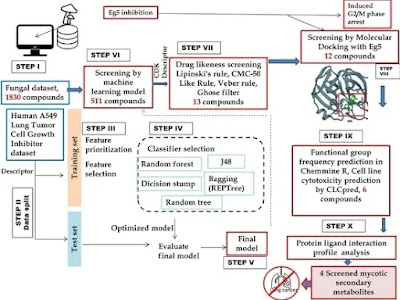


Among the various types of cancer, lung cancer is the second most-diagnosed cancer worldwide. The kinesin spindle protein, Eg5, is a vital protein behind bipolar mitotic spindle establishment and maintenance during mitosis. Eg5 has been reported to contribute to cancer cell migration and angiogenesis impairment and has no role in resting, non-dividing cells. Thus, it could be considered as a vital target against several cancers, such as renal cancer, lung cancer, urothelial carcinoma, prostate cancer, squamous cell carcinoma, etc. In recent years, fungal secondary metabolites from the Indian Himalayan Region (IHR) have been identified as an important lead source in the drug development pipeline. Therefore, the present study aims to identify potential mycotic secondary metabolites against the Eg5 protein by applying integrated machine learning, chemoinformatics based in silico-screening methods and molecular dynamic simulation targeting lung cancer. Initially, a library of 1830 mycotic secondary metabolites was screened by a predictive machine-learning model developed based on the random forest algorithm with high sensitivity (1) and an ROC area of 0.99. Further, 319 out of 1830 compounds screened with active potential by the model were evaluated for their drug-likeness properties by applying four filters simultaneously, viz., Lipinski’s rule, CMC-50 like rule, Veber rule, and Ghose filter. A total of 13 compounds passed from all the above filters were considered for molecular docking, functional group analysis, and cell line cytotoxicity prediction. Finally, four hit mycotic secondary metabolites found in fungi from the IHR were screened viz., (−)-Cochlactone-A, Phelligridin C, Sterenin E, and Cyathusal A. All compounds have efficient binding potential with Eg5, containing functional groups like aromatic rings, rings, carboxylic acid esters, and carbonyl and with cell line cytotoxicity against lung cancer cell lines, namely, MCF-7, NCI-H226, NCI-H522, A549, and NCI H187. Further, the molecular dynamics simulation study confirms the docked complex rigidity and stability by exploring root mean square deviations, root mean square fluctuations, and radius of gyration analysis from 100 ns simulation trajectories. The screened compounds could be used further to develop effective drugs against lung and other types of cancer.

Wednesday, 16 February 2022

Evaluation and Mathematical Analysis of a Four-Dimensional Lotka–Volterra-like Equation Designed to Describe the Batch Nisin Production System

 Mathematics 2022, 10(5), 677

Nisin, an antibacterial compound produced by Lactococcus lactis strains, has been approved by the US Food and Drug Administration to be used as a safe food additive to control the growth of undesirable pathogenic bacteria. Nisin is commonly described as a pH-dependent primary metabolite since its production depends on growth and culture pH evolution. However, the relationships between bacteriocin synthesis (BT), biomass production (X), culture pH, and the consumption of the limiting nutrient (total nitrogen: TN) have not been described until now. Therefore, this study aims to develop a competitive four-dimensional Lotka–Volterra-like Equation (predator-prey system) to describe these complex relationships in three series of batch fermentations with L. lactis CECT 539 in diluted whey (DW)-based media. The developed four-dimensional predator-prey system accurately described each individual culture, providing a good description of the relationships between pH, TN, X, and BT, higher values for R2 and F-ratios, lower values (<10%) for the mean relative percentage deviation modulus, with bias and accuracy factor values approximately equal to one. The mathematical analysis of the developed equation showed the existence of one asymptotically stable equilibrium point, and the phase’s diagram obtained did not show the closed elliptic trajectories observed in biological predator-prey systems.

Tuesday, 15 February 2022

Thermochemical Characterization of Eight Seaweed Species and Evaluation of Their Potential Use as an Alternative for Biofuel Production and Source of Bioactive Compounds

Int. J. Mol. Sci. 2022, 23(4), 2355


Algae are underexplored resources in Western countries and novel approaches are needed to boost their industrial exploitation. In this work, eight edible seaweeds were subjected to their valorization in terms of nutritional characterization, thermochemical properties, and bioactive profile. Our results suggest that seaweeds present a rich nutritional profile, in which carbohydrates are present in high proportions, followed by a moderate protein composition and a valuable content of ω-3 polyunsaturated fatty acids. The thermochemical characterization of seaweeds showed that some macroalgae present a low ash content and high volatile matter and carbon fixation rates, being promising sources for alternative biofuel production. The bioactive profile of seaweeds was obtained from their phenolic and carotenoid content, together with the evaluation of their associated bioactivities. Among all the species analyzed, Porphyra purpurea presented a balanced composition in terms of carbohydrates and proteins and the best thermochemical profile. This species also showed moderate anti-inflammatory activity. Additionally, Himanthalia elongata extracts showed the highest contents of total phenolics and a moderate carotenoid content, which led to the highest rates of antioxidant activity. Overall, these results suggest that seaweeds can be used as food or functional ingredient to increase the nutritional quality of food formulations.


Monday, 14 February 2022

Luteolin Alleviates Epithelial-Mesenchymal Transformation Induced by Oxidative Injury in ARPE-19 Cell via Nrf2 and AKT/GSK-3β Pathway

Oxidative Medicine and Cellular Longevity, 2022, 2265725


   Oxidative stress plays a critical role in age-related macular degeneration (AMD), and epithelial-mesenchymal transition (EMT) is involved in this process. The aim of this study was to investigate the protective effects of luteolin, a natural flavonoid with strong antioxidant activity, on H2O2-induced EMT in ARPE-19 cells. ARPE-19 cells were incubated with H2O2 at 200 μΜ to induce oxidative stress-associated injury. Cell viability assay showed that luteolin at 20 and 40 μM significantly promoted cell survival in H2O2-treated ARPE-19 cells. Luteolin also markedly protected ARPE-19 cells from H2O2-induced apoptosis. Cell migration assay presented that luteolin significantly reduced H2O2-induced migration in APRE-19 cells. EMT in ARPE-19 cells was detected by western blotting and immunofluorescence. The results showed that H2O2 significantly upregulated the expression of α-SMA and vimentin and downregulated the expression of ZO-1 and E-cadherin, while cells pretreated with luteolin showed a reversal. Meanwhile, the assessment of effects of luteolin on the Nrf2 pathway indicated that luteolin promoted Nrf2 nuclear translocation and upregulated the expressions of HO-1 and NQO-1. In addition, luteolin significantly increased the activities of SOD and GSH-PX and decreased intracellular levels of ROS and MDA in H2O2-treated ARPE-19 cells. Meanwhile, we observed that the expression of TGF-β2, p-AKT, and p-GSK-3β was upregulated in H2O2-treated ARPE-19 cells and downregulated in luteolin-treated cells, revealing that luteolin inhibited the activation of the AKT/GSK-3β pathway. However, these effects of luteolin were all annulled by transfecting ARPE-19 cells with Nrf2 siRNA. Our current data collectively indicated that inhibition of luteolin on EMT was induced by oxidative injury in ARPE-19 cell through the Nrf2 and AKT/GSK-3βpathway, suggesting that luteolin could be a potential drug for the treatment of dry AMD.

Friday, 4 February 2022

Development of nanofiber indicator with high sensitivity for pork preservation and freshness monitoring

 Food Chem. 381, 132224 (2022)


A visual Polyvinylidene Fluoride (PVDF) fibrous film incorporated with Roselle anthocyanin (RS) and Cinnamon essential oil (CEO) (PRC film) was designed via electrospinning technology for pork preservation and freshness monitoring. The PRC film presented well structural integrity and stability in buffer solutions without leaking out RS. And PCR film had well hydrophobic and high permeability with water contact angle (WCA) of 109.52° and water vapor permeability (WVP) of 2.63 × 10⁻⁷ g m−1h−1Pa−1. Importantly, PRC film exhibited good antibacterial activity with the inhibition diameter at 29.0 mm and 27.1 mm which against Escherichia coli and staphylococcus aureus, respectively. Finally, the PRC film was employed as a colorimetric sensor for monitoring pork freshness. It presented visible color changes from pink to blue and effectively prolonged the pork shelf-life by 2 days at 4 °C. These results indicate a great potential in intelligent and active packaging.

Thursday, 3 February 2022

Phytochemical and multi-biological characterization of two Cynara scolymus L. varieties: A glance into their potential large scale cultivation and valorization as bio-functional ingredients

 Industrial Crops and Products, 2022, 178, 114623


Artichoke leaf (Cynarae folium) extracts are used as traditional herbal medicinal products to treat a wide range of human ailments, being widely commercialized as nutraceutical or pharmaceutical preparations. In the current study, the hydromethanolic dried leaf extracts of Cynara scolymus L. var. major Brotero and C. scolymus L. var. redonensis N.H.F. Desp. were phytochemically and biologically investigated. The liquid chromatography high-resolution tandem mass spectrometry (LC-HRMS/MS) metabolite profiling showed a complex composition, with phenolic acids (mostly mono- and di-caffeoylquinic acids), flavonoids and sesquiterpene lactones as the most representative classes. The strong antioxidant activity of the two C. scolymus varieties was evidenced in DPPH [64.84–65.21 mg trolox equivalents (TE)/g] and ABTS (86.39–95.55 mg TE/g) radical scavenging, cupric (160.49–171.07 mg TE/g) and ferric (71.47–78.95 mg TE/g) reducing capacity, metal chelating and phosphomolybdenum assays. In addition, the two extracts also displayed anti-enzymatic effects, as assessed in cholinesterase, tyrosinase, glucosidase and amylase tests. Lastly, the artichoke samples (at the concentration of 20 μg/mL) proved a very potent inhibition of the production of several pro-inflammatory cytokines, namely interleukin (IL)-1β [7.55–15.75% of lipopolysaccharide (LPS) + cells], IL-8 (11.72–13.46% of LPS + cells) and tumor necrosis factor (TNF)-α (4.07–10.35% LPS + cells), in LPS-stimulated human neutrophils. Overall, the results of our study indicate that the two C. scolymus varieties could be regarded as a rich source of biologically active compounds, opening thus the perspectives for their future large scale cultivation and valorization as bio-functional ingredients with putative antioxidant, anti-enzymatic and anti-inflammatory effects.

Wednesday, 2 February 2022

Effect of Silymarin as an Adjunct Therapy in Combination with Sofosbuvir and Ribavirin in Hepatitis C Patients: A Miniature Clinical Trial

 Oxidative Medicine and Cellular Longevity, 2022, 9199190


Silymarin is proclaimed to be a blend of flavonolignans or phytochemicals. An era of new generation of direct-acting antivirals (DAAs) has commenced to have facet effect in swaying of the hepatitis C virus (HCV). Nonetheless, this therapy has serious side effects that jeopardize its efficacy. This study is aimed at probing the effects of ribavirin (RBV) and sofosbuvir (SOF) along with silymarin as an adjunct therapy on hematological parameters and markers of obscured oxidative stress. The effect of DAAs along with silymarin was also examined on variable sex hormone level and liver function markers such as alanine aminotransferase (ALT), aspartate transaminase (AST), alkaline phosphatase (ALP), and bilirubin. The study was followed to determine viral load and viral genotypes. A total of 30 patients were randomly divided into two equal groups comprising the control group () and treatment group (). The control group was solely administered with DAAs (SOF and RBV; 400 mg/800 mg each/day). Conversely, the treatment group was dispensed with DAAs, but with adjunct therapy of silymarin (400 mg/day) along with DAAs (400/800 mg/day) over period of 8 weeks. Sampling of blood was performed at pre- and posttreatment levels for the evaluation of different propound parameters. Our data showed that silymarin adjunct therapy enhances the efficiency of DAAs. A decrease in menace level of liver markers such as ALT, ALP, AST, and bilirubin was observed (). The adjunct therapy concurrently also demonstrated an ameliorative effect on hematological indices and oxidative markers, for instance, SOD, TAS, GSH, GSSG, and MDA (), diminishing latent viral load. The silymarin administration was also found to revamp the fluster level of sex hormones. Our outcomes provide evidence that systematic administration of silymarin effectively remits deviant levels of hematological, serological, hormonal, and antioxidant markers. This demonstrates a possibly unique role of silymarin in mitigating hepatitis C.

Tuesday, 1 February 2022

Agar/TiO2/radish anthocyanin/neem essential oil bionanocomposite bilayer films with improved bioactive capability and electrochemical writing property for banana preservation

 Food Hydrocolloids 123, 107187, 2022


Active agar (AG) bilayer films with bioactive capability and electrochemical writing property were developed for improving the postharvest quality of the banana. The antioxidant and antimicrobial capacity of the films were enhanced with the incorporation of red radish extract (RRE) and neem essential oil (NEO) into AG lower layer. The barrier and mechanical properties, retention of total anthocyanin and NEO content in the bilayer films were effectively improved with addition of TiO2 into the AG upper layer. Multicolor patterns were successfully written on the bilayer film containing RRE. The AG-TiO2+AG-RRE-NEO bilayer film exhibited the optimal preservations on banana fruits during the storage period, based on the characterization by fruits appearance, senescent spotting symptom, microbial analysis, weight loss and firmness. Thus, the AG-TiO2+AG-RRE-NEO bilayer film was expected to be a multifunction packaging material for banana preservation.

Monday, 31 January 2022

Pigment Composition of Nine Brown Algae from the Iberian Northwestern Coastline: Influence of the Extraction Solvent

 Mar. Drugs 2022, 20(2), 113


Brown algae are ubiquitously distributed in the NW coastline of the Iberian Peninsula, where they stand as an underexploited resource. In this study, five solvents were applied to the extraction of pigments from nine brown algae, followed by their determination and quantification by HPLC-DAD. A total of 13 compounds were detected: Six were identified as chlorophylls, six were classified as xanthophylls, and one compound was reported as a carotene. Fucoxanthin was reported in all extracts, which is the most prominent pigment of these algae. Among them, L. saccharina and U. pinnatifida present the highest concentration of fucoxanthin (4.5–4.7 mg∙g−1 dry weight). Ethanol and acetone were revealed as the most efficient solvents for the extraction of pigments, showing a maximal value of 11.9 mg of total pigments per gram of dry alga obtained from the ethanolic extracts of H. elongata, followed by the acetonic extracts of L. ochroleuca. Indeed, ethanol was also revealed as the most efficient solvent according to its high extraction yield along all species evaluated. Our results supply insights into the pigment composition of brown algae, opening new perspectives on their commercial exploitation by food, pharmaceutical, and cosmeceutical industries.

Monday, 24 January 2022

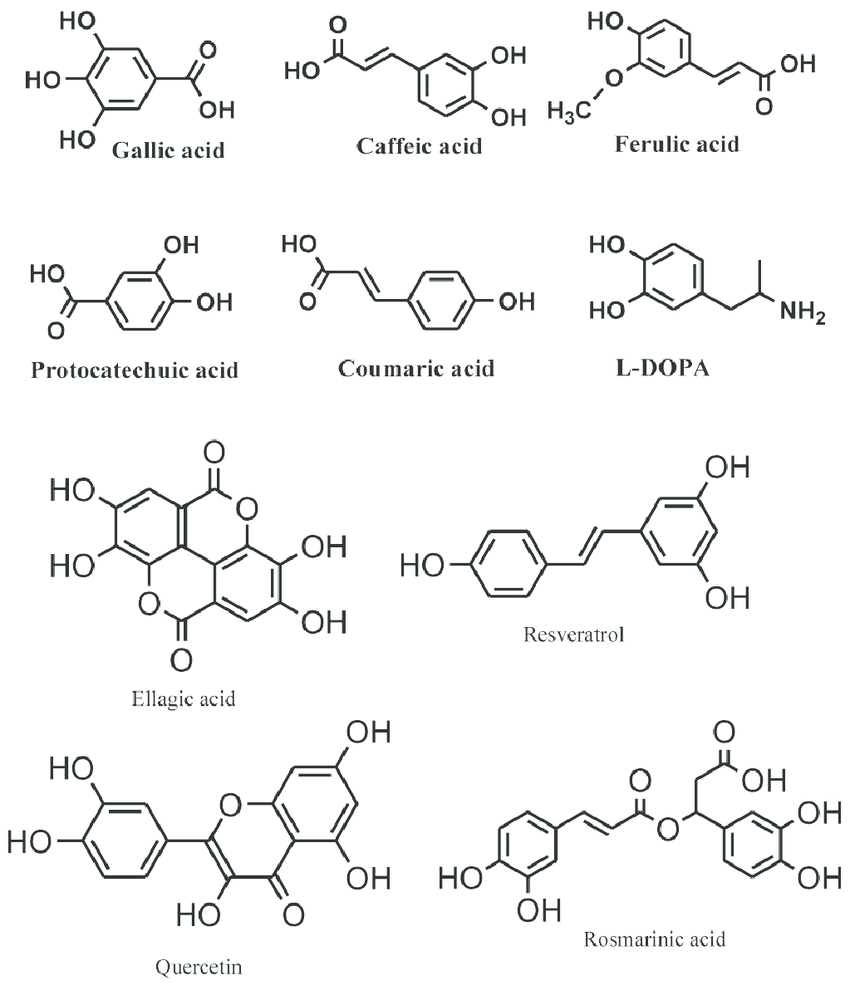
Polyphenols: A first evidence in the synergism and bioactivities

 Food Rev. Int. 2022


Polyphenols are natural compounds and the most plentiful with synergistic properties contributing to potential health benefits. This review describes the synergistic interactions of polyphenolic compounds; as yet, no literature review has been undertaken to consider the experimental evidence of synergistic effects of polyphenols. The polyphenolic compounds claimed to have synergistic activities are highly effective against oxidation, peptic ulcers, myocardial infarction, tumors, and a variety of other conditions. In addition, anticancer activity via apoptosis and antibacterial, antifungal, anti-inflammatory, and estrogenic behaviors have also been reported. Apart from the synergistic effects of polyphenols, this review also illustrates their specific health benefits too and bioavailability in humans. The toxicity of some polyphenolic agents, including antinutritional effects, chronic nephrotoxicity, reduction in net protein utilization and antiluteinizing hormone, and tumor development, is also evaluated. Synergistic treatment approaches may be effective in the treatment of many diseases. These findings provide information about the benefits of polyphenol compounds in combination, which could be useful for future studies.


Tuesday, 18 January 2022

A dual-signal fluorescent sensor based on MoS2 and CdTe quantum dots for tetracycline detection in milk

 Food Chem. 378, 132076 (2022)


A dual-signal fluorescent sensor was developed for tetracycline (TET) detection in milk with excellent reproducibility and stability. In this protocol, molybdenum disulfide quantum dots (MoS2 QDs) with blue fluorescence and cadmium telluride quantum dots (CdTe QDs) with yellow fluorescence were synthesized to establish the MoS2/CdTe-based sensor with two fluorescence emission peaks at 433 nm and 573 nm. With the addition of TET, the fluorescence of MoS2/CdTe were quenched by photoinduced electron transfer (PET), and the fluorescence of CdTe QDs were quenched more obvious than MoS2 QDs. With the strategy, a calibration curve was established between the TET concentration in the range of 0.1–1 μM and the ratio of fluorescence intensity at 573 nm and 433 nm (F573/F433). Furthermore, the dual-signal sensor was applied for TET detection in milk samples with the recovery of 95.53–104.22% and the relative standard deviation (RSD) less than 5%, indicating the strong application potential.


Monday, 17 January 2022

Chitosan and flavonoid glycosides are promising combination partners for enhanced inhibition of heterocyclic amine formation in roast beef

 Food Chemistry, 375, 131859, 2022


The effects of different kinds of chitosan, oligomer (ChiO) and monomer (Gluco), and the combinations of polymer (Chi) or ChiO with flavonoid aglycones and glycosides against the formation of major HAs were investigated to find out potential combination partners for enhanced suppression of HA formation. Results in roast beef patties showed ChiO and Gluco significantly inhibited PhIP and MeIQx formation by 43–80% and 31–57%, respectively. Of which, ChiO was the most effective. In combinations with flavonoid glycosides (phloridzin, rutin and hesperidzin, respectively), Chi, but not ChiO, generated enhanced inhibitory effects. Further analysis showed Chi and phloridzin combined at a ratio of 1:1 was the most promising, especially in inhibiting PhIP, and the mechanism behind involved: 1) water retention by Chi, and 2) reduction of phenylalanine availability by phloridzin. These findings suggest that appropriate combination of Chi and flavonoid glycosides contributes to significant improvement in the safety of meat products.