Inflammopharmacology, 30, 2017–2026 (2022)
Wednesday, 31 August 2022
Pirfenidone and post-Covid-19 pulmonary fibrosis: invoked again for realistic goals
Tuesday, 30 August 2022
Comparative study on the phenolic composition and in vitro bioactivity of medicinal and aromatic plants from the Lamiaceae family
Food Res. Int. 161, 111875, 2022
Thursday, 25 August 2022
The Nutritional and Bioactive Components, Potential Health Function and Comprehensive Utilization of Pomegranate: A Review
Tuesday, 23 August 2022
Hepatoprotective Mechanism of Ginsenoside Rg1 against Alcoholic Liver Damage Based on Gut Microbiota and Network Pharmacology
Oxidative Medicine and Cellular Longevity, 2022, 5025237
Alcoholic liver disease (ALD) is a major public health problem worldwide, which needs to be effective prevention. Ginsenoside Rg1 (GRg1), a bioactive ingredient extracted from ginseng, has benefit effects on health. In this study, 11 potential targets of GRg1 against ALD were firstly obtained by network pharmacology. KEGG pathway enrichment showed that GRg1-target-ALD was closely related to Toll-like receptor (TLR) and nuclear factor-kappa B (NF-κB) signaling pathways. In addition, GRg1 decreased antioxidant levels and increased oxidative levels in alcohol-treated mice, which alleviated oxidative stress-induced hepatic damage. GRg1 enhanced intestinal barrier function via upregulating the levels of tight junction protein and immunoglobulin A. GRg1 also reduced alcohol-induced inflammation by suppressing TLR4/NF-κB pathway, which was consistent with the prediction of network targets. Moreover, GRg1 altered GM population, and Verrucomicrobia, Bacteroidetes, Akkermansia, Bacteroides, Lachnospiraceae_NK4A136_group, and Alloprevotella played positive association with intestinal barrier indicators and negative correlation with hepatic inflammation biomarkers. The results suggest that GRg1 administration might be a promising strategy for protection of alcohol-induced liver damage.
Wednesday, 10 August 2022
Metabolomics approach reveals high energy diet improves the quality and enhances the flavor of black Tibetan sheep meat by altering the composition of rumen microbiota
Monday, 1 August 2022
Safer plant-based nanoparticles for combating antibiotic resistance in bacteria: A comprehensive review on its potential applications, recent advances, and future perspective
Science of the Total Environment, 821, 153472. 2022
Background
Antibiotic resistance is one of the current threats to human health, forcing the use of drugs that are more noxious, costlier, and with low efficiency. There are several causes behind antibiotic resistance, including over-prescription of antibiotics in both humans and livestock. In this scenario, researchers are shifting to new alternatives to fight back this concerning situation.
Scope and approach
Nanoparticles have emerged as new tools that can be used to combat deadly bacterial infections directly or indirectly to overcome antibiotic resistance. Although nanoparticles are being used in the pharmaceutical industry, there is a constant concern about their toxicity toward human health because of the involvement of well-known toxic chemicals (i.e., sodium/potassium borohydride) making their use very risky for eukaryotic cells.
Key findings and conclusions
Multiple nanoparticle-based approaches to counter bacterial infections, providing crucial insight into the design of elements that play critical roles in the creation of antimicrobial nanotherapeutic drugs, are currently underway. In this context, plant-based nanoparticles will be less toxic than many other forms, which constitute promising candidates to avoid widespread damage to the microbiome associated with current practices. This article aims to review the actual knowledge on plant-based nanoparticle products for antibiotic resistance and the possible replacement of antibiotics to treat multidrug-resistant bacterial infections.
Tuesday, 26 July 2022
Advances on Natural Abietane, Labdane and Clerodane Diterpenes as Anti-Cancer Agents: Sources and Mechanisms of Action
Tuesday, 12 July 2022
Essential oils nano-emulsion confers resistance against Penicillium digitatum in 'Newhall' navel orange by promoting phenylpropanoid metabolism
Industrial Crops and Products, 187(A), 115297, 2022
Friday, 8 July 2022
The influence of phytochemicals on cell heterogeneity in chronic inflammation-associated diseases: the prospects of single cell sequencing
The Journal of Nutritional Biochemistry, 108, 109091, 2022
Friday, 1 July 2022
Biological properties and potential of compounds extracted from red seaweeds
Macroalgae have been recently used for different applications in the food, cosmetic and pharmaceutical industry since they do not compete for land and freshwater against other resources. Moreover, they have been highlighted as a potential source of bioactive compounds. Red algae (Rhodophyta) are the largest group of seaweeds, including around 6000 different species, thus it can be hypothesized that they are a potential source of bioactive compounds. Sulfated polysaccharides, mainly agar and carrageenans, are the most relevant and exploited compounds of red algae. Other potential molecules are essential fatty acids, phycobiliproteins, vitamins, minerals, and other secondary metabolites. All these compounds have been demonstrated to exert several biological activities, among which antioxidant, anti-inflammatory, antitumor, and antimicrobial properties can be highlighted. Nevertheless, these properties need to be further tested on in vivo experiments and go in-depth in the study of the mechanism of action of the specific molecules and the understanding of the structure–activity relation. At last, the extraction technologies are essential for the correct isolation of the molecules, in a cost-effective way, to facilitate the scale-up of the processes and their further application by the industry. This manuscript is aimed at describing the fundamental composition of red algae and their most studied biological properties to pave the way to the utilization of this underused resource.
Wednesday, 29 June 2022
Fu Brick Tea Manages HFD/STZ-Induced Type 2 Diabetes by Regulating the Gut Microbiota and Activating the IRS1/PI3K/Akt Signaling Pathway
J. Agric. Food Chem. 2022, 70, 27, 8274–8287
Monday, 27 June 2022
Application of Protein in Extrusion-Based 3D Food Printing: Current Status and Prospectus
Friday, 10 June 2022
Lobularia libyca: Phytochemical Profiling, Antioxidant and Antimicrobial Activity Using In Vitro and In Silico Studies
Saturday, 4 June 2022
Nano-priming as emerging seed priming technology for sustainable agriculture—recent developments and future perspectives
Journal of Nanobiotechnology 20, 254 (2022)
Friday, 3 June 2022
Novel hydrophobic colorimetric films based on ethylcellulose/castor oil/anthocyanins for pork freshness monitoring
Wednesday, 1 June 2022
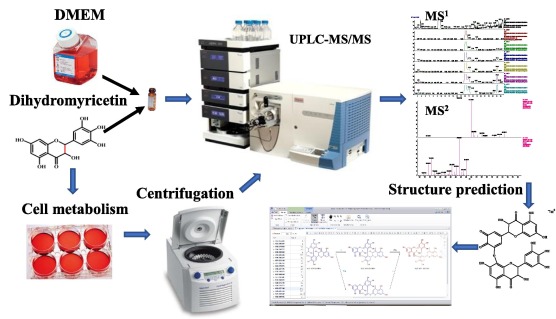
Stability profiling and degradation products of dihydromyricetin in Dulbecco's modified eagle's medium
Dihydromyricetin has shown many bioactivities in cell level. However, dihydromyricetin was found to be highly instable in cell culture medium DMEM. Here, the underlying degradation mechanism was investigated via UPLC-MS/MS analysis. Dihydromyricetin was mainly converted into its dimers and oxidized products. At lower temperature, dihydromyricetin in DMEM showed higher stability. Vitamin C increased the stability of dihydromyricetin in DMEM probably due to its high antioxidant potential.
Monday, 30 May 2022
A high-stable and sensitive colorimetric nanofiber sensor based on PCL incorporating anthocyanins for shrimp freshness
Wednesday, 18 May 2022
Green Synthesis of Silver Nanoparticles Using Allium cepa var. Aggregatum Natural Extract: Antibacterial and Cytotoxic Properties
Nanomaterials 2022, 12(10), 1725
Friday, 13 May 2022
Nutmeg (Myristica fragrans Houtt.) essential oil: A review on its composition, biological, and pharmacological activities
Phytotherapy Research, 36, 2839-2851, 2022
Myristica fragrans (Houtt.) is an evergreen tree native to the Maluku Islands, Indonesia. M. fragrans kernel is extensively used in Indian traditional medicines to treat various diseases. Several studies attempt to compile and interpret the pharmacological potential of Myristica fragrans (Houtt.) aqueous and various chemical extracts. Thus, the pharmacological potential of nutmeg essential oil has not been reviewed phytochemically and pharmacologically. Therefore, the present study aimed to share appropriate literature evidence regarding the plant essential oil chemical composition and therapeutic potential of Myristica fragrans essential oil (MFEO). MFEO of leaf, mace, kernel, and seed were used worldwide as potential Ayurvedic medicine and fragrance. MFEO extracted by various methods and oil yield was 0.7–3.2, 8.1–10.3, 0.3–12.5, and 6.2–7.6% in leaf, mace, seed, and kernel. The primary chemical constituents of MFEO were sabinene, eugenol, myristicin, caryophyllene, β-myrcene, and α-pinene. Clinical and experimental investigations have confirmed the antioxidant, antimicrobial, antiinflammatory, anticancer, antimalarial, anticonvulsant, hepatoprotective, antiparasitic, insecticidal, and nematocidal activities of MFEO. It is the first attempt to compile oil yield, composition, and the biological activities of MFEO. In future, several scientific investigations are required to understand the mechanism of action of MFEO and their bioactive constituents.
Wednesday, 11 May 2022
Fruit Juice Industry Wastes as a Source of Bioactives
J. Agric. Food Chem. 2022, 70, 23, 6805–6832