Sunday, 5 March 2023
Pressurized Liquid Extraction for the Recovery of Bioactive Compounds from Seaweeds for Food Industry Application: A Review
Wednesday, 22 February 2023
Sulfur-Containing Compounds from Plants
Natural Secondary Metabolites. Springer, Cham. (2023)
Friday, 6 January 2023
Application of fermentation for the valorization of residues from Cactaceae family
Saturday, 1 October 2022
From Tradition to Health: Chemical and Bioactive Characterization of Five Traditional Plants
Wednesday, 11 May 2022
Fruit Juice Industry Wastes as a Source of Bioactives
J. Agric. Food Chem. 2022, 70, 23, 6805–6832
Friday, 29 January 2021
Main Applications of Cyclodextrins in the Food Industry as the Compounds of Choice to Form Host–Guest Complexes
Int. J. Mol. Sci. 2021, 22(3), 1339
Cyclodextrins (CDs) are cyclic oligomers broadly used in food manufacturing as food additives for different purposes, e.g., to improve sensorial qualities, shelf life, and sequestration of components. In this review, the latest advancements of their applications along with the characteristics of the uses of the different CDs (α, β, γ and their derivatives) were reviewed. Their beneficial effects can be achieved by mixing small amounts of CDs with the target material to be stabilized. Essentially, they have the capacity to form stable inclusion complexes with sensitive lipophilic nutrients and constituents of flavor and taste. Their toxicity has been also studied, showing that CDs are innocuous in oral administration. A review of the current legislation was also carried out, showing a general trend towards a wider acceptance of CDs as food additives. Suitable and cost-effective procedures for the manufacture of CDs have progressed, and nowadays it is possible to obtain realistic prices and used them in foods. Therefore, CDs have a promising future due to consumer demand for healthy and functional products.
Friday, 2 October 2020
Extraction, Properties, and Applications of Bioactive Compounds Obtained from Microalgae
Current Pharmaceutical Design, 2020, 26, 1929-1950
DOI: 10.2174/1381612826666200403172206

Friday, 25 September 2020
Macroalgae as a Source of Valuable Antimicrobial Compounds: Extraction and Applications
Antibiotics 2020, 9(10), 642
DOI:10.3390/antibiotics9100642

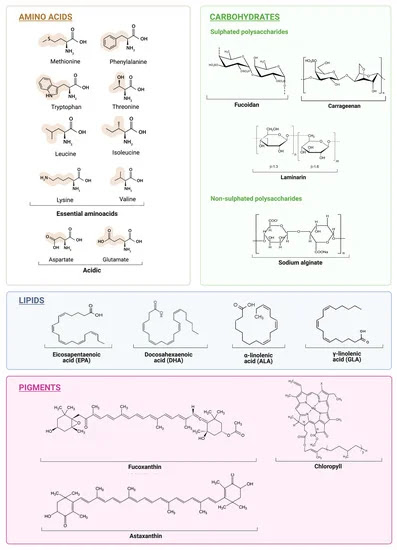
In the last few decades, attention on new natural antimicrobial compounds has arisen due to a change in consumer preferences and the increase in the number of resistant microorganisms. Macroalgae play a special role in the pursuit of new active molecules as they have been traditionally consumed and are known for their chemical and nutritional composition and their biological properties, including antimicrobial activity. Among the bioactive molecules of algae, proteins and peptides, polysaccharides, polyphenols, polyunsaturated fatty acids and pigments can be highlighted. However, for the complete obtaining and incorporation of these molecules, it is essential to achieve easy, profitable and sustainable recovery of these compounds. For this purpose, novel liquid–liquid and solid–liquid extraction techniques have been studied, such as supercritical, ultrasound, microwave, enzymatic, high pressure, accelerated solvent and intensity pulsed electric fields extraction techniques. Moreover, different applications have been proposed for these compounds, such as preservatives in the food or cosmetic industries, as antibiotics in the pharmaceutical industry, as antibiofilm, antifouling, coating in active packaging, prebiotics or in nanoparticles. This review presents the main antimicrobial potential of macroalgae, their specific bioactive compounds and novel green extraction technologies to efficiently extract them, with emphasis on the antibacterial and antifungal data and their applications.
Friday, 18 September 2020
Valorization of by-products from olive oil industry and added-value applications for innovative functional foods
Food Research International, 2020, 137, 109683
DOI:10.1016/j.foodres.2020.109683

Sunday, 21 June 2020
Pomegranate Peel as Suitable Source of High-Added Value Bioactives: Tailored Functionalized Meat Products
Monday, 8 June 2020
Scientific basis for the industrialization of traditionally used plants of the Rosaceae family
Food Chemistry, 2020, 330, 127197
https://doi.org/10.1016/j.foodchem.2020.127197


