Friday, 3 February 2023
Metabolic profiling of Ochradenus baccatus Delile. utilizing UHPLC-HRESIMS in relation to the in vitro biological investigations
Thursday, 2 February 2023
Mechanistic insights of Cucumis melo L. seeds for gastrointestinal muscle spasms through calcium signaling pathway–related gene regulation networks in WGCNA and in vitro, in vivo studies
Wednesday, 1 February 2023
A review of recent innovative strategies for controlling mycotoxins in foods
Food Control, 144, 109350, 2023
Tuesday, 31 January 2023
An intrinsic dual-emitting fluorescence sensing toward tetracycline with self-calibration model based on luminescent lanthanide-functionalized metal-organic frameworks
Monday, 30 January 2023
Study on cinnamon essential oil release performance based on pH-triggered dynamic mechanism of active packaging for meat preservation
Sunday, 29 January 2023
Enhancement of bioavailability and bioactivity of diet-derived flavonoids by application of nanotechnology
Crit. Rev. Food Sci. Nut. 63 (3) 378-393 (2023)
Friday, 27 January 2023
Exploration of Indian Traditional recipe “Tarvaani” from the drained rice gruel for nutritional and probiotic potential
Int. j. Gastron. Food Sci. 31, 100670, 2023
Wednesday, 25 January 2023
Effects of alginates on the growth, haematological, immunity, antioxidant and pro-inflammatory responses of rabbits under high temperature
Res. Vet. Sci. 155, 36-43, 2023
Tuesday, 24 January 2023
Evaluation of Moringa oleifera and corn starch as feed for seed production of the pearl oyster Pteria sterna (Gould,1851)
Aquaculture, 567, 739259, 2023
In the search for complementary diets to improve performance in bivalve farming, the use of terrestrial plants with nutritional and nutraceutical properties has been proposed as an alternative. The effectiveness of moringa leaf meal Moringa oleifera (Mo) was evaluated under controlled laboratory conditions (30 days), as a dietary supplement during the pre-growth stage of Pteria sterna seeds (7.2 ± 0.59 mm), as well as its combinations with microalgae and corn starch (Co), on growth and survival in the laboratory and its subsequent initial suspended culture in the sea. Diets were formulated with a mixture of the microalgae Tetraselmis suecica and Chaetoceros gracilis (M), diet M; M and 5% Mo (M + Mo); diet M and 5% corn starch (M + Co); 100% moringa leaf meal (Mo); 100% corn starch (Co), and diet M with 2.5% Mo and 2,5% Co (M + Mo + Co). The Mo diet did not provide pre-seed sustainability, resulting in 100% mortality at 30 days. From the rest of the diets, M obtained the lowest oyster survival, while M + Mo and M + Mo + Co showed the highest growth rates. At the end of the laboratory bioassay, the seeds were sown in a culture system in the open sea (50 days), where the highest growth occurred in the juveniles previously fed with M + Mo + Co. The results suggest that, in the nursery, P. sterna pre-seeds can be maintained with a diet of 100% corn starch, but not with 100% moringa flour, probably due to its poor digestibility. However, moringa used as an additive to the microalgae diet provided a higher yield in the oyster, which is reflected in a higher yield in the initial culture outdoors.
Monday, 23 January 2023
Guaiazulene and related compounds: A review of current perspective on biomedical applications
Sunday, 22 January 2023
Recent advances in Chinese food authentication and origin verification using isotope ratio mass spectrometry
Saturday, 21 January 2023
Structures and Functions of Cuticular Wax in Postharvest Fruit and Its Regulation: A Comprehensive Review with Future Perspectives
Friday, 20 January 2023
Effects of quercetin on emissions of aldehydes from heated docosahexaenoic acid (DHA)-fortified soybean oil
J. Hazard. Mat. 442, 130134, 2023
Thursday, 19 January 2023
Evaluation of Moringa oleifera and corn starch as feed for seed production of the pearl oyster Pteria sterna (Gould,1851)
Aquaculture, 567, 739259, 2023
Wednesday, 18 January 2023
Guaiazulene and related compounds: A review of current perspective on biomedical applications
Tuesday, 17 January 2023
Traditional use, phytochemistry, toxicology, and pharmacological properties of Lavandula dentata L.,: A comprehensive review
South Africa J. Botany, 154- 67-87, 2023
Monday, 16 January 2023
HPLC–DAD Analysis, Antimicrobial and Antioxidant Properties of Aromatic Herb Melissa officinalis L., Aerial Parts Extracts
Food Analytical Methods 16, 45–54 (2023)
In order to enhance natural products value, Melissa officinalis (lemon balm) aerial part (leaves) has been studied in this work. Hence, the objective of this study is to determine the chemical composition of the studied plant polyphenols extracts using HPLC/DAD, as well as evaluate their flavonoid extracts’ antioxidant and antimicrobial activities using DPPH• and disk diffusion methods, respectively. The results of phenols chemical composition showed the existence of two phenolic acids, five flavonic aglycones and six heterosides, while the biologic results of the plant flavonoid extracts exhibited the existence of a good antioxidant and antimicrobial activities.
Sunday, 15 January 2023
The International Natural Product Sciences Taskforce (INPST) and the power of Twitter networking exemplified through #INPST hashtag analysis
Saturday, 14 January 2023
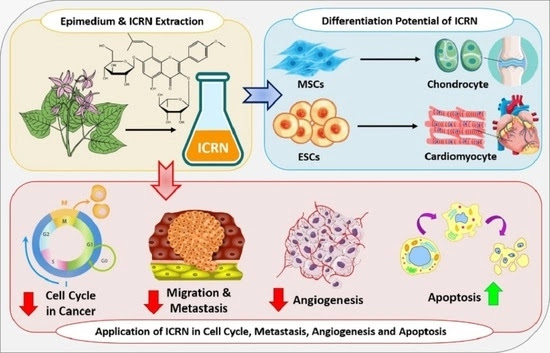
Icariin: A Promising Natural Product in Biomedicine and Tissue Engineering
J. Funct. Biomater. 2023, 14(1), 44