J. Hazard. Mat. 442, 130134, 2023
Friday, 20 January 2023
Effects of quercetin on emissions of aldehydes from heated docosahexaenoic acid (DHA)-fortified soybean oil
Thursday, 19 January 2023
Evaluation of Moringa oleifera and corn starch as feed for seed production of the pearl oyster Pteria sterna (Gould,1851)
Aquaculture, 567, 739259, 2023
Wednesday, 18 January 2023
Guaiazulene and related compounds: A review of current perspective on biomedical applications
Tuesday, 17 January 2023
Traditional use, phytochemistry, toxicology, and pharmacological properties of Lavandula dentata L.,: A comprehensive review
South Africa J. Botany, 154- 67-87, 2023
Monday, 16 January 2023
HPLC–DAD Analysis, Antimicrobial and Antioxidant Properties of Aromatic Herb Melissa officinalis L., Aerial Parts Extracts
Food Analytical Methods 16, 45–54 (2023)
In order to enhance natural products value, Melissa officinalis (lemon balm) aerial part (leaves) has been studied in this work. Hence, the objective of this study is to determine the chemical composition of the studied plant polyphenols extracts using HPLC/DAD, as well as evaluate their flavonoid extracts’ antioxidant and antimicrobial activities using DPPH• and disk diffusion methods, respectively. The results of phenols chemical composition showed the existence of two phenolic acids, five flavonic aglycones and six heterosides, while the biologic results of the plant flavonoid extracts exhibited the existence of a good antioxidant and antimicrobial activities.
Sunday, 15 January 2023
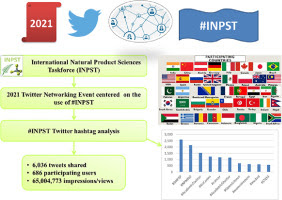
The International Natural Product Sciences Taskforce (INPST) and the power of Twitter networking exemplified through #INPST hashtag analysis
Saturday, 14 January 2023
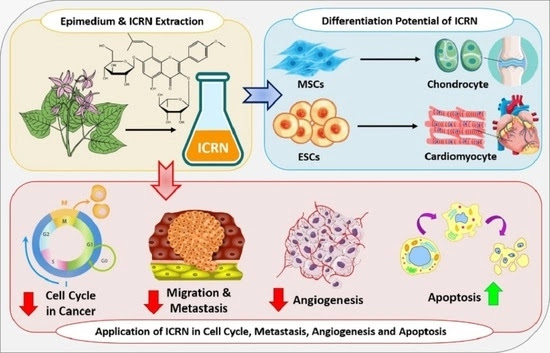
Icariin: A Promising Natural Product in Biomedicine and Tissue Engineering
J. Funct. Biomater. 2023, 14(1), 44
Friday, 13 January 2023
Structures and Functions of Cuticular Wax in Postharvest Fruit and Its Regulation: A Comprehensive Review with Future Perspectives
Thursday, 12 January 2023
Targeting of neuroinflammation by glibenclamide in Covid-19: old weapon from arsenal
Inflammopharmacology, 31, 1-7 (2023)
Wednesday, 11 January 2023
The International Natural Product Sciences Taskforce (INPST) and the power of Twitter networking exemplified through #INPST hashtag analysis
Background
The development of digital technologies and the evolution of open innovation approaches have enabled the creation of diverse virtual organizations and enterprises coordinating their activities primarily online. The open innovation platform titled “International Natural Product Sciences Taskforce” (INPST) was established in 2018, to bring together in collaborative environment individuals and organizations interested in natural product scientific research, and to empower their interactions by using digital communication tools.
Methods
In this work, we present a general overview of INPST activities and showcase the specific use of Twitter as a powerful networking tool that was used to host a one-week “2021 INPST Twitter Networking Event” (spanning from 31st May 2021 to 6th June 2021) based on the application of the Twitter hashtag #INPST.
Results and Conclusion
The use of this hashtag during the networking event period was analyzed with Symplur Signals (https://www.symplur.com/), revealing a total of 6,036 tweets, shared by 686 users, which generated a total of 65,004,773 impressions (views of the respective tweets). This networking event's achieved high visibility and participation rate showcases a convincing example of how this social media platform can be used as a highly effective tool to host virtual Twitter-based international biomedical research events.
Tuesday, 10 January 2023
Effects of alginates on the growth, haematological, immunity, antioxidant and pro-inflammatory responses of rabbits under high temperature
Res. Vet. Sci. 155, 36-43, 2023
Monday, 9 January 2023
Classification and authentication of tea according to their harvest season based on FT-IR fingerprinting using pattern recognition methods
J. Food Comp. Anal. 115, 104995 (2023)
Sunday, 8 January 2023
Fatty acids in seed oil of wild and cultivated rosehip (Rosa canina L.) from different locations in Serbia
Ind. Crop Prod. 191 B, 115797, 2023
Saturday, 7 January 2023
Potential of essential oils for protection of Couscous against Aspergillus flavus and aflatoxin B1 contamination
Food Control, 145, 109474, 2023
Friday, 6 January 2023
Application of fermentation for the valorization of residues from Cactaceae family
Thursday, 5 January 2023
Fatty acids in seed oil of wild and cultivated rosehip (Rosa canina L.) from different locations in Serbia
Ind. Crop Prod. 191, Part B, 115797, 2023
Wednesday, 4 January 2023
Two Years of Life for a New Journal: Compounds
The present year marked the third year of Compounds (ISSN 2673-6918), which was born in 2021 with the aim of providing a platform for the communication of scientific achievements in the field of the synthesis, characterization, and properties of chemical compounds from both a theoretical point of view as experimental.
During its first two years, the articles published in Compounds were viewed more than 60,000 times, which demonstrates the impact that our journal is amassing among the scientific community. These data stem from article metrics available on the MPDI publishing platform, where multiple requests originating from the same IP address are counted as one view/download. On the other hand, according to Crossref, the articles that we have published already have fifty citations.
Tuesday, 3 January 2023
Classification and authentication of tea according to their harvest season based on FT-IR fingerprinting using pattern recognition methods
J. Food Comp. Anal. 115, 104995, 2023
Monday, 2 January 2023
Potential of essential oils for protection of Couscous against Aspergillus flavus and aflatoxin B1 contamination
Food Control, 145, 109474, 2023
Sunday, 1 January 2023
A selective turn-on fluorescent chemosensor 1,1-diaminoazine for azinphos-methyl
J. Photochem. Photobiol A: Chem. 437, 114476, 2023