Thursday, 25 August 2022
The Nutritional and Bioactive Components, Potential Health Function and Comprehensive Utilization of Pomegranate: A Review
Tuesday, 23 August 2022
Hepatoprotective Mechanism of Ginsenoside Rg1 against Alcoholic Liver Damage Based on Gut Microbiota and Network Pharmacology
Oxidative Medicine and Cellular Longevity, 2022, 5025237
Alcoholic liver disease (ALD) is a major public health problem worldwide, which needs to be effective prevention. Ginsenoside Rg1 (GRg1), a bioactive ingredient extracted from ginseng, has benefit effects on health. In this study, 11 potential targets of GRg1 against ALD were firstly obtained by network pharmacology. KEGG pathway enrichment showed that GRg1-target-ALD was closely related to Toll-like receptor (TLR) and nuclear factor-kappa B (NF-κB) signaling pathways. In addition, GRg1 decreased antioxidant levels and increased oxidative levels in alcohol-treated mice, which alleviated oxidative stress-induced hepatic damage. GRg1 enhanced intestinal barrier function via upregulating the levels of tight junction protein and immunoglobulin A. GRg1 also reduced alcohol-induced inflammation by suppressing TLR4/NF-κB pathway, which was consistent with the prediction of network targets. Moreover, GRg1 altered GM population, and Verrucomicrobia, Bacteroidetes, Akkermansia, Bacteroides, Lachnospiraceae_NK4A136_group, and Alloprevotella played positive association with intestinal barrier indicators and negative correlation with hepatic inflammation biomarkers. The results suggest that GRg1 administration might be a promising strategy for protection of alcohol-induced liver damage.
Wednesday, 10 August 2022
Metabolomics approach reveals high energy diet improves the quality and enhances the flavor of black Tibetan sheep meat by altering the composition of rumen microbiota
Monday, 1 August 2022
Safer plant-based nanoparticles for combating antibiotic resistance in bacteria: A comprehensive review on its potential applications, recent advances, and future perspective
Science of the Total Environment, 821, 153472. 2022
Background
Antibiotic resistance is one of the current threats to human health, forcing the use of drugs that are more noxious, costlier, and with low efficiency. There are several causes behind antibiotic resistance, including over-prescription of antibiotics in both humans and livestock. In this scenario, researchers are shifting to new alternatives to fight back this concerning situation.
Scope and approach
Nanoparticles have emerged as new tools that can be used to combat deadly bacterial infections directly or indirectly to overcome antibiotic resistance. Although nanoparticles are being used in the pharmaceutical industry, there is a constant concern about their toxicity toward human health because of the involvement of well-known toxic chemicals (i.e., sodium/potassium borohydride) making their use very risky for eukaryotic cells.
Key findings and conclusions
Multiple nanoparticle-based approaches to counter bacterial infections, providing crucial insight into the design of elements that play critical roles in the creation of antimicrobial nanotherapeutic drugs, are currently underway. In this context, plant-based nanoparticles will be less toxic than many other forms, which constitute promising candidates to avoid widespread damage to the microbiome associated with current practices. This article aims to review the actual knowledge on plant-based nanoparticle products for antibiotic resistance and the possible replacement of antibiotics to treat multidrug-resistant bacterial infections.
Tuesday, 26 July 2022
Advances on Natural Abietane, Labdane and Clerodane Diterpenes as Anti-Cancer Agents: Sources and Mechanisms of Action
Tuesday, 12 July 2022
Essential oils nano-emulsion confers resistance against Penicillium digitatum in 'Newhall' navel orange by promoting phenylpropanoid metabolism
Industrial Crops and Products, 187(A), 115297, 2022
Friday, 8 July 2022
The influence of phytochemicals on cell heterogeneity in chronic inflammation-associated diseases: the prospects of single cell sequencing
The Journal of Nutritional Biochemistry, 108, 109091, 2022
Friday, 1 July 2022
Biological properties and potential of compounds extracted from red seaweeds
Macroalgae have been recently used for different applications in the food, cosmetic and pharmaceutical industry since they do not compete for land and freshwater against other resources. Moreover, they have been highlighted as a potential source of bioactive compounds. Red algae (Rhodophyta) are the largest group of seaweeds, including around 6000 different species, thus it can be hypothesized that they are a potential source of bioactive compounds. Sulfated polysaccharides, mainly agar and carrageenans, are the most relevant and exploited compounds of red algae. Other potential molecules are essential fatty acids, phycobiliproteins, vitamins, minerals, and other secondary metabolites. All these compounds have been demonstrated to exert several biological activities, among which antioxidant, anti-inflammatory, antitumor, and antimicrobial properties can be highlighted. Nevertheless, these properties need to be further tested on in vivo experiments and go in-depth in the study of the mechanism of action of the specific molecules and the understanding of the structure–activity relation. At last, the extraction technologies are essential for the correct isolation of the molecules, in a cost-effective way, to facilitate the scale-up of the processes and their further application by the industry. This manuscript is aimed at describing the fundamental composition of red algae and their most studied biological properties to pave the way to the utilization of this underused resource.
Wednesday, 29 June 2022
Fu Brick Tea Manages HFD/STZ-Induced Type 2 Diabetes by Regulating the Gut Microbiota and Activating the IRS1/PI3K/Akt Signaling Pathway
J. Agric. Food Chem. 2022, 70, 27, 8274–8287
Monday, 27 June 2022
Application of Protein in Extrusion-Based 3D Food Printing: Current Status and Prospectus
Friday, 10 June 2022
Lobularia libyca: Phytochemical Profiling, Antioxidant and Antimicrobial Activity Using In Vitro and In Silico Studies
Saturday, 4 June 2022
Nano-priming as emerging seed priming technology for sustainable agriculture—recent developments and future perspectives
Journal of Nanobiotechnology 20, 254 (2022)
Friday, 3 June 2022
Novel hydrophobic colorimetric films based on ethylcellulose/castor oil/anthocyanins for pork freshness monitoring
Wednesday, 1 June 2022
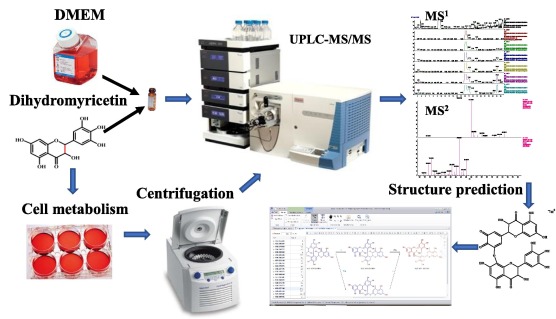
Stability profiling and degradation products of dihydromyricetin in Dulbecco's modified eagle's medium
Dihydromyricetin has shown many bioactivities in cell level. However, dihydromyricetin was found to be highly instable in cell culture medium DMEM. Here, the underlying degradation mechanism was investigated via UPLC-MS/MS analysis. Dihydromyricetin was mainly converted into its dimers and oxidized products. At lower temperature, dihydromyricetin in DMEM showed higher stability. Vitamin C increased the stability of dihydromyricetin in DMEM probably due to its high antioxidant potential.
Monday, 30 May 2022
A high-stable and sensitive colorimetric nanofiber sensor based on PCL incorporating anthocyanins for shrimp freshness
Wednesday, 18 May 2022
Green Synthesis of Silver Nanoparticles Using Allium cepa var. Aggregatum Natural Extract: Antibacterial and Cytotoxic Properties
Nanomaterials 2022, 12(10), 1725
Friday, 13 May 2022
Nutmeg (Myristica fragrans Houtt.) essential oil: A review on its composition, biological, and pharmacological activities
Phytotherapy Research, 36, 2839-2851, 2022
Myristica fragrans (Houtt.) is an evergreen tree native to the Maluku Islands, Indonesia. M. fragrans kernel is extensively used in Indian traditional medicines to treat various diseases. Several studies attempt to compile and interpret the pharmacological potential of Myristica fragrans (Houtt.) aqueous and various chemical extracts. Thus, the pharmacological potential of nutmeg essential oil has not been reviewed phytochemically and pharmacologically. Therefore, the present study aimed to share appropriate literature evidence regarding the plant essential oil chemical composition and therapeutic potential of Myristica fragrans essential oil (MFEO). MFEO of leaf, mace, kernel, and seed were used worldwide as potential Ayurvedic medicine and fragrance. MFEO extracted by various methods and oil yield was 0.7–3.2, 8.1–10.3, 0.3–12.5, and 6.2–7.6% in leaf, mace, seed, and kernel. The primary chemical constituents of MFEO were sabinene, eugenol, myristicin, caryophyllene, β-myrcene, and α-pinene. Clinical and experimental investigations have confirmed the antioxidant, antimicrobial, antiinflammatory, anticancer, antimalarial, anticonvulsant, hepatoprotective, antiparasitic, insecticidal, and nematocidal activities of MFEO. It is the first attempt to compile oil yield, composition, and the biological activities of MFEO. In future, several scientific investigations are required to understand the mechanism of action of MFEO and their bioactive constituents.
Wednesday, 11 May 2022
Fruit Juice Industry Wastes as a Source of Bioactives
J. Agric. Food Chem. 2022, 70, 23, 6805–6832
Tuesday, 10 May 2022
Recent Development in Antioxidant Peptides of Woody Oil Plant By-Products
Monday, 2 May 2022
Volatile Flavor Compounds of Pugionium cornutum (L.) Gaertn. Before and After Different Dehydration Treatments
Sunday, 1 May 2022
The reciprocal interaction between polyphenols and other dietary compounds: Impact on bioavailability, antioxidant capacity and other physico-chemical and nutritional parameters
Food Chem. 375, 131904, (2022)
Thursday, 28 April 2022
Humic Acids Aggregates as Microheterogeneous Reaction Media: Alkaline Hydrolysis Reactions
The influence of humic aggregates in a water solution upon the chemical stability under basic conditions of different substrates was reviewed. The kinetic behavior of each substrate was modeled in terms of a micellar pseudophase model.
Wednesday, 27 April 2022
Reactivity of a Recombinant Esterase from Thermus thermophilus HB27 in Aqueous and Organic Media
Microorganisms 2022, 10(5), 915
Tuesday, 26 April 2022
Genetic variability, combining ability and molecular diversity-based parental line selection for heterosis breeding in field corn (Zea mays L.)
Mol Biol Rep 49, 4517–4524 (2022)
An Overview of Traditional Uses, Phytochemical Compositions and Biological Activities of Edible Fruits of European and Asian Cornus Species
Cornus species are widely distributed in central and southern Europe, east Africa, southwest Asia, and America. Several species are known for edible fruits, especially Cornus mas and Cornus officinalis. These delicious fruits, characterized by their remarkable nutritional and biological values, are widely used in traditional medicine. In contrast to the other edible Cornus species, C. mas and C. officinalis are the most studied for which little information is available on the main phytochemicals and their biological activities. Fruits are characterised by several classes of secondary metabolites, such as flavonoids, phenolic acids, lignans, anthocyanins, tannins, triterpenoids, and iridoids. The available phytochemical data show that the different classes of metabolites have not been systematically studied. However, these edible species are all worthy of interest because similarities have been found. Thus, this review describes the traditional uses of Cornus species common in Europe and Asia, a detailed classification of the bioactive compounds that characterize the fruits, and their beneficial health effects. Cornus species are a rich source of phytochemicals with nutritional and functional properties that justify the growing interest in these berries, not only for applications in the food industry but also useful for their medicinal properties.
Thursday, 14 April 2022
Effects of Torreya grandis Kernel Oil on Lipid Metabolism and Intestinal Flora in C57BL/6J Mice
Oxidative Medicine and Cellular Longevity, 2022, 4472751
Wednesday, 13 April 2022
Ultrasonic-assisted extraction of polyphenolic compounds from Paederia scandens (Lour.) Merr. Using deep eutectic solvent: optimization, identification, and comparison with traditional methods
Ultrasonics Sonochemistry, 86, 106005, 2022
Ultrasonic-assisted extraction (UAE) coupled with deep eutectic solvent (DES) is a novel, efficient and green extraction method for phytochemicals. In this study, the effects of 16 DESs coupled with UAE on the extraction rate of polyphenols from Paederia scandens (Lour.) Merr. (P. scandens), an edible and medicinal herb, were investigated. DES synthesised with choline chloride and ethylene glycol at a 1:2 M ratio resulted in the highest extractability. Moreover, the effects of extraction parameters were investigated by using a two-level factorial experiment followed by response surface methodology The optimal parameters (water content in DES of 49.2%, the actual ultrasonic power of 72.4 W, and ultrasonic time of 9.7 min) resulted in the optimal total flavonoid content (TFC) (27.04 mg CE/g DW), ferric-reducing antioxidant power (FRAP) value (373.27 μmol Fe(Ⅱ)E/g DW) and 2,2′-azino-bis(3-ethylbenzthiazoline)-6-sulfonic acid radical (ABTS+) value (48.64 μmol TE/g DW), closely matching the experimental results. Furthermore, a comparison study demonstrated that DES-UAE afforded the higher TFC and FRAP value than traditional extraction methods. 36 individual polyphenolic compounds were identified and quantified by ultra-high-performance liquid chromatography-mass spectrometry (UHPLC-MS) in P. scandens extracts, and of which 30 were found in the extracts obtained by DES-UAE. Additionally, DES-UAE afforded the highest sum of individual polyphenolic compound content. These results revealed that DES-UAE enhanced the extraction efficiency for polyphenols and provided a scientific basis for further processing and utilization of P. scandens.
Wednesday, 6 April 2022
Blockchain: An emerging novel technology to upgrade the current fresh fruit supply chain
Trends in Food Science & Technology, 124, 1-12, 2022
Wednesday, 23 March 2022
Anti-Depressant Properties of Crocin Molecules in Saffron
Tuesday, 15 March 2022
Natural Polyphenols for the Preservation of Meat and Dairy Products
Food spoilage makes foods undesirable and unacceptable for human use. The preservation of food is essential for human survival, and different techniques were initially used to limit the growth of spoiling microbes, e.g., drying, heating, salting, or fermentation. Water activity, temperature, redox potential, preservatives, and competitive microorganisms are the most important approaches used in the preservation of food products. Preservative agents are generally classified into antimicrobial, antioxidant, and anti-browning agents. On the other hand, artificial preservatives (sorbate, sulfite, or nitrite) may cause serious health hazards such as hypersensitivity, asthma, neurological damage, hyperactivity, and cancer. Thus, consumers prefer natural food preservatives to synthetic ones, as they are considered safer. Polyphenols have potential uses as biopreservatives in the food industry, because their antimicrobial and antioxidant activities can increase the storage life of food products. The antioxidant capacity of polyphenols is mainly due to the inhibition of free radical formation. Moreover, the antimicrobial activity of plants and herbs is mainly attributed to the presence of phenolic compounds. Thus, incorporation of botanical extracts rich in polyphenols in perishable foods can be considered since no pure polyphenolic compounds are authorized as food preservatives. However, individual polyphenols can be screened in this regard. In conclusion, this review highlights the use of phenolic compounds or botanical extracts rich in polyphenols as preservative agents with special reference to meat and dairy products.
Saturday, 12 March 2022
Ethnobotanical and phytochemical aspects of the edible herb Coriandrum sativum L.
Journal of Food Science, 87(4), 2022, 1386-1422
Friday, 4 March 2022
Unravelling the immunomodulatory role of apple phenolic rich extracts on human THP-1- derived macrophages using multiplatform metabolomics
Food Res. Int. 155, 111037, 2022
Thursday, 3 March 2022
Morus alba L. (Sangzhi) Alkaloids Promote Insulin Secretion, Restore Diabetic β-Cell Function by Preventing Dedifferentiation and Apoptosis
Front. Pharmacol., Sec. Ethnopharmacology, 2022
Tuesday, 1 March 2022
Simultaneous determination of ten nucleosides and bases in Ganoderma by micellar electrokinetic chromatography
Food Science and Human Wellness, 11 (2), 263-268, 2022
Thursday, 24 February 2022
Antidiabetic Phytochemicals From Medicinal Plants: Prospective Candidates for New Drug Discovery and Development
Friday, 18 February 2022
Extraction of the wheat straw hemicellulose fraction assisted by commercial endo-xylanases. Role of the accessory enzyme activities
Industrial Crops and Products, 179, 2022, 114655
Wheat straw is a highly promising raw material for bio-refinery strategies. Most of the literature related to lignocellulose fractionation focuses on cellulose purification and hemicellulose solubilization. Pre-treatments for hemicellulose solubilization without the formation of undesired products usually reach low extraction yields, which leaves an important hemicellulose fraction unused. In this work, we propose a mild process for the efficient extraction of the hemicellulose fraction of wheat straw assisted by partial enzymatic hydrolysis with three commercial endo-xylanase cocktails. A first step with alkali at 40 ºC helped to disrupt the lignocellulosic structure and removed 19% of lignin while maintaining most of the hemicellulose in the solid. The enzymatic step enabled reaching extraction yields of 59.8%, 51.9%, and 42.5% with Ultraflo L, Pentopan mono conc, and Shearzyme 500L, respectively. We also discuss the catalytic properties of each endo-xylanase, in particular, their adscription to the GH10 or GH11 glycosyl hydrolase family, and the relevant role of accessory enzymes.
Thursday, 17 February 2022
Integrated Machine Learning and Chemoinformatics-Based Screening of Mycotic Compounds against Kinesin Spindle ProteinEg5 for Lung Cancer Therapy
Among the various types of cancer, lung cancer is the second most-diagnosed cancer worldwide. The kinesin spindle protein, Eg5, is a vital protein behind bipolar mitotic spindle establishment and maintenance during mitosis. Eg5 has been reported to contribute to cancer cell migration and angiogenesis impairment and has no role in resting, non-dividing cells. Thus, it could be considered as a vital target against several cancers, such as renal cancer, lung cancer, urothelial carcinoma, prostate cancer, squamous cell carcinoma, etc. In recent years, fungal secondary metabolites from the Indian Himalayan Region (IHR) have been identified as an important lead source in the drug development pipeline. Therefore, the present study aims to identify potential mycotic secondary metabolites against the Eg5 protein by applying integrated machine learning, chemoinformatics based in silico-screening methods and molecular dynamic simulation targeting lung cancer. Initially, a library of 1830 mycotic secondary metabolites was screened by a predictive machine-learning model developed based on the random forest algorithm with high sensitivity (1) and an ROC area of 0.99. Further, 319 out of 1830 compounds screened with active potential by the model were evaluated for their drug-likeness properties by applying four filters simultaneously, viz., Lipinski’s rule, CMC-50 like rule, Veber rule, and Ghose filter. A total of 13 compounds passed from all the above filters were considered for molecular docking, functional group analysis, and cell line cytotoxicity prediction. Finally, four hit mycotic secondary metabolites found in fungi from the IHR were screened viz., (−)-Cochlactone-A, Phelligridin C, Sterenin E, and Cyathusal A. All compounds have efficient binding potential with Eg5, containing functional groups like aromatic rings, rings, carboxylic acid esters, and carbonyl and with cell line cytotoxicity against lung cancer cell lines, namely, MCF-7, NCI-H226, NCI-H522, A549, and NCI H187. Further, the molecular dynamics simulation study confirms the docked complex rigidity and stability by exploring root mean square deviations, root mean square fluctuations, and radius of gyration analysis from 100 ns simulation trajectories. The screened compounds could be used further to develop effective drugs against lung and other types of cancer.
Wednesday, 16 February 2022
Evaluation and Mathematical Analysis of a Four-Dimensional Lotka–Volterra-like Equation Designed to Describe the Batch Nisin Production System
Nisin, an antibacterial compound produced by Lactococcus lactis strains, has been approved by the US Food and Drug Administration to be used as a safe food additive to control the growth of undesirable pathogenic bacteria. Nisin is commonly described as a pH-dependent primary metabolite since its production depends on growth and culture pH evolution. However, the relationships between bacteriocin synthesis (BT), biomass production (X), culture pH, and the consumption of the limiting nutrient (total nitrogen: TN) have not been described until now. Therefore, this study aims to develop a competitive four-dimensional Lotka–Volterra-like Equation (predator-prey system) to describe these complex relationships in three series of batch fermentations with L. lactis CECT 539 in diluted whey (DW)-based media. The developed four-dimensional predator-prey system accurately described each individual culture, providing a good description of the relationships between pH, TN, X, and BT, higher values for R2 and F-ratios, lower values (<10%) for the mean relative percentage deviation modulus, with bias and accuracy factor values approximately equal to one. The mathematical analysis of the developed equation showed the existence of one asymptotically stable equilibrium point, and the phase’s diagram obtained did not show the closed elliptic trajectories observed in biological predator-prey systems.
Tuesday, 15 February 2022
Thermochemical Characterization of Eight Seaweed Species and Evaluation of Their Potential Use as an Alternative for Biofuel Production and Source of Bioactive Compounds
Int. J. Mol. Sci. 2022, 23(4), 2355